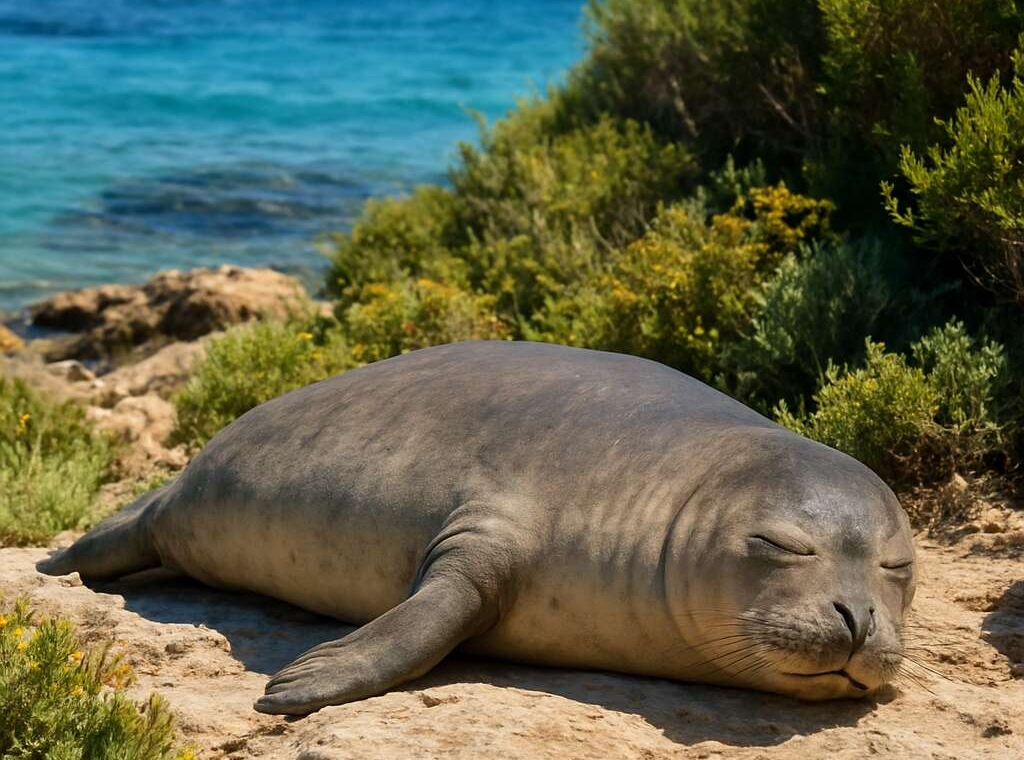
Introduction to the Mediterranean Monk Seal
Overview of Monachus monachus – Taxonomy, physical characteristics, and general description
Standing resilient against the relentless march of time and human encroachment, the Mediterranean Monk Seal (Monachus monachus) is one of the most elusive marine mammals in existence. With a history shrouded in mystique, this species embodies the primal beauty of the Mediterranean Sea. Recognized for its sleek, robust body and distinctive head shape, the Monachus monachus commands attention in its natural habitat. Its physical characteristics—such as a thick neck, heavy-set body, and broad snout—set it apart from other seal species, emphasizing its unique evolutionary journey.
The taxonomy of the Mediterranean Monk Seal aligns it with the monk seal genus Monachus, a group distinguished by their impressive adaptability and resilient nature. Despite its formidable look, the Monachus monachus is critically endangered, with fewer than 700 individuals believed to remain. This species prefers secluded caves and rugged coastlines, where it can rest and hunt in relative safety. Their solitary behavior and secretive nature add layers of intrigue to their story—making every glimpse of this majestic seal a rare treasure.
- Physical traits that capture attention: robust build, broad head, and sleek fur.
- Habitat preferences: inaccessible caves and rocky shores.
- Taxonomy: belonging to the genus Monachus, a symbol of ancient Mediterranean resilience.
Historical Range and Distribution – Historical habitats, current locations, and migration patterns
Once roaming the sun-kissed shores of the ancient Mediterranean, the Mediterranean Monk Seal (Monachus monachus) was once a common sight along sprawling coastlines and secluded bays. Its presence once spanned a vast range, from the rugged shores of Greece and Turkey to the island-dotted reaches of Portugal and North Africa. Today, this majestic creature’s historical habitat serves as a haunting reminder of fragile ecosystems that have since been transformed by human activity.
Current locations of the Mediterranean Monk Seal are now perilously limited. They cling to remote caves and rocky inlets, often hidden from view and protected by nature’s own fortresses. Migration patterns of Monachus monachus remain shrouded in mystery, as these seals tend to lead solitary lives, fiercely guarding their territory in quiet, inaccessible corners of their dwindling range.
- Greece’s isolated caves and rocky islands
- Turkish coasts and Aegean Sea refuges
- North African maritime fringes, where the species once flourished
The stark contraction of their habitat underscores the urgency of their conservation, yet each sighting feels like an encounter with a living relic—an echo of the Mediterranean’s primeval past, and a testament to the resilience of Monachus monachus against relentless forces that threaten their existence.
Role in Marine Ecosystems – Ecological importance and interactions with other species
When it comes to marine megafauna, few creatures evoke the same blend of awe and melancholy as the Mediterranean Monk Seal (Monachus monachus). This species has a remarkably ecological role that goes largely unnoticed by the casual observer. Despite their rarity, these seals are vital players in their ecosystems, helping to maintain the delicate balance of Mediterranean marine life.
The Mediterranean Monk Seal acts as both predator and prey within its niche. They primarily prey on fish and invertebrates, which in turn keeps these populations in check. Their presence also indirectly benefits seabirds and other marine species, creating a web of interactions that underscores their importance. In fact, the Mediterranean Monk Seal’s diet and territorial behaviors influence local biodiversity, making them an integral part of the Mediterranean’s underwater tapestry.
Beyond just their individual survival, these seals maintain the health of marine habitats, especially in areas with abundant caves and rocky inlets where they breed and rest. Their interactions with other species demonstrate a complex ecological network—one that is increasingly fragile and in need of conservation. Preserving the Mediterranean Monk Seal means safeguarding the intricate and often overlooked relationships that sustain Mediterranean marine ecosystems.
Habitat and Behavior of the Mediterranean Monk Seal
Preferred Habitats – Caves, rocky shores, and beaches
Nestled amidst the rugged coastal landscapes of the Mediterranean, the habitat of the Mediterranean Monk Seal Monachus monachus paints a picture of serene seclusion and ancient maritime whispers. These elusive creatures prefer caves, rocky shores, and secluded beaches, where the whisper of the waves provides a harmonious backdrop to their enigmatic existence. Their choice of habitat is as if drawn by enchanted forces—places where the sun-dappled rocks meet the cool embrace of the sea, creating a sanctuary safe from the prying eyes of predators and humans alike.
The behavior of the Mediterranean Monk Seal Monachus monachus is characterized by a gentle, almost mythical grace that belies their formidable presence. They often haul out onto rocky ledges or squeeze into hidden caves for rest and breeding, demonstrating a remarkable tenacity in surviving amidst challenging environments. During breeding seasons, males become fiercely territorial, defending their chosen cave or stretch of coast with silent vigilance.
Their activity cycle is largely centered around foraging during the night, where they rely on an acute sense of smell and keen eyesight to hunt for fish, cephalopods, and crustaceans—integral components of their diet. This nocturnal nature, coupled with their preference for secluded habitats, has kept the Mediterranean Monk Seal Monachus monachus shrouded in myth, a living relic of a bygone world.
Breeding and Nurseries – Mating behaviors, breeding seasons, and pup rearing
The breeding and nursery behaviors of the Mediterranean Monk Seal Monachus monachus unveil a world of quiet resilience and delicate balance. During the breeding season, which typically spans from late spring to early summer, these remarkable creatures gather in secluded caves and rocky alcoves—hidden sanctuaries few humans ever glimpse. Males stake out territories with silent vigilance, often fiercely defending their chosen haul-out sites from rivals, as they prepare for the arrival of their mates.
Pup rearing is an intricate process that emphasizes safety and careful nurturing. Newborn pups are born with a thick coat of lanugo, which they shed after a few days, and they depend entirely on their mothers for nourishment. Mother seals, often solitary during this period, keep their pups safe within the tranquility of the caves, away from predators and disturbance. In the early weeks, the pups grow rapidly, their playful squeals echoing softly against the rocky surfaces, as the young seals begin to grasp the essence of life in the secluded waters.
The seasonal rhythm of mating and rearing highlights the Mediterranean Monk Seal’s extraordinary adaptability in maintaining their fragile population. Their behavior, driven by the need for refuge and quiet solitude, helps ensure the survival of their ancient lineage amidst the shifting sands of their Mediterranean habitat.
Diving and Foraging Habits – Dietary preferences, diving depths, and foraging techniques
The Mediterranean Monk Seal Monachus monachus is one of the most elusive and captivating marine mammals, with a remarkable history that echoes through the Mediterranean waters. Their habitat and behavior reveal a creature finely tuned to the rhythmic pulse of the sea, thriving in rugged caves and rocky shores that serve as both sanctuary and nursery. These seals are expert divers, capable of plunging to depths over 200 meters in search of their preferred diet—mainly fish, octopus, and crustaceans. Their foraging techniques involve slow, deliberate swims that minimize disturbance, allowing them to expertly hunt in the shadows of their rocky refuges.
Typically, the Mediterranean Monk Seal shows a preference for areas with abundant caves and rocky crevices, where they can rest, raise their pups, and avoid predators. Their choice of habitat is driven by the necessity for peace and safety, especially during breeding seasons. During foraging expeditions, they surface frequently to breathe, often traveling long distances between feeding grounds and resting spots—demonstrating their extraordinary adaptability in an increasingly fragmented environment.
These seals tend to forage in the early mornings or late afternoons, when the Mediterranean waters are calmer and visibility is optimal. Their hunting style is characterized by a patient and stealthy approach—sometimes gliding slowly along the seabed or lurking within rocky formations, waiting for the right moment to strike. It’s this delicate balance of cautious movement and swift action that makes the Mediterranean Monk Seal a master of survival amidst dwindling habitats.
Social Structure and Communication – Group behaviors, vocalizations, and interactions
The Mediterranean Monk Seal Monachus monachus is arguably the shyest celebrity in the marine world—rare, elusive, and cloaked in mystery. Despite its endangered status, this seal’s social behaviors tell a captivating story of survival and subtle communication. Unlike flashy dolphins, the Mediterranean Monk Seal relies heavily on silent signals and gentle vocalizations that echo through rocky caves and coastal hideouts. Their vocal repertoire includes soft grunts and gentle whistles, which serve as auditory nudges among colony members, especially during breeding season.
Socially, these seals tend to be solitary or form small, loose groups—usually a mother with her pup, or a pair during mating rituals. They are not the party animals of the marine realm but do demonstrate a surprising level of interaction through visual cues and subtle body language. When resting on rocky shores, they often maintain silent vigilance, occasionally calling out to maintain contact with nearby seals. This quiet communication adds to their mystique, reinforcing their reputation as aquatic hermits with a secret social life.
It’s worth noting that the Mediterranean Monk Seal exhibits a fascinating blend of independence and social bonds—especially during the breeding season when interactions become more pronounced. These moments are critical for the survival of their delicate population, emphasizing the importance of protecting their habitats. Despite their elusive nature, each vocalization and glance tells a story of resilience in the face of shrinking habitats and increasing environmental pressures.
- Small groups often consist of a mother and her pup or a mated pair.
- Vocalizations include soft grunts, whistles, and gentle calls used primarily for communication during mating and pup rearing.
- Body language, such as head nods and nudges, helps reinforce social bonds in their sparse communities.
Conservation Challenges Facing the Mediterranean Monk Seal
Threats to Population – Habitat destruction, fishing nets, pollution, and human disturbance
The fragile existence of the Mediterranean Monk Seal, Monachus monachus, faces a maelstrom of threats that continue to threaten its survival. Habitat destruction ranks high among these challenges, as coastal development and tourism erode the secluded caves, rocky shores, and beaches vital to this species. Each displaced seal symbolizes a loss to the delicate balance of marine ecosystems that rely on their ecological role.
Fishing nets pose a deadly risk, ensnaring these gentle creatures as they forage through underwater caves and rocky outcrops. Entanglement often results in injury or death, diminishing already dwindling populations. Pollution, ranging from plastic debris to chemical contamination, further poisons their environment, impairing both health and reproductive success. Human disturbance, whether through boat traffic or enforced tourism, heightens stress levels in the Mediterranean Monk Seal, disrupting breeding and resting behaviors.
Protecting the Monachus monachus demands concerted efforts. It is crucial to monitor threats and implement measures such as safe marine zones and sustainable fishing practices, ensuring this endangered marine mammal can continue its ancient journey across the Mediterranean.
Illegal Hunting and Poaching – Historical and current impacts
Illegal hunting and poaching have cast long shadows over the fate of the Mediterranean Monk Seal Monachus monachus for centuries. Historically, this gentle marine mammal was hunted for its valuable pelts and oil, often resulting in startling population declines. Although outright hunting has become less common today, illicit poaching still threatens the survival of this critically endangered species.
The clandestine nature of illegal hunting makes it particularly difficult to combat. Smugglers and poachers exploit remote locations, making deterrence a challenge. Despite protective laws, some local traders still prize the meat and skins of the Mediterranean Monk Seal Monachus monachus, fueling a disturbing black market.
- Poaching for hide and oil, especially in less monitored areas
- Trafficking in pups for captive displays or illegal pet trade
- Illegal fishing practices that inadvertently harm seals
This illicit activity not only reduces numbers directly but also hampers conservation efforts, threatening the delicate balance of marine ecosystems where these seals play a pivotal role. The ongoing threat of illegal hunting underscores the urgent need for international cooperation and strengthened enforcement to safeguard the future of the Mediterranean Monk Seal Monachus monachus.
Climate Change Effects – Sea-level rise, temperature variations, and habitat loss
With a strikingly fragile presence against the backdrop of the Mediterranean, the Mediterranean Monk Seal Monachus monachus faces existential threats that are as relentless as they are subtle. Climate change, often dismissed as a distant concern, is increasingly reshaping the very habitats these gentle creatures rely on. Sea-level rise threatens to swallow traditional breeding caves and resting sites, forcing seals into narrower refuges or forcing migration to less suitable environments. Temperature variations complicate the delicate balance of their ecosystem, affecting prey availability and disrupting breeding cycles.
Habitat loss mirrors the relentless march of human interference—urban expansion, overdevelopment along coastlines, and pollution deplete the hiding spots and nurseries of Monachus monachus. Sometimes, the destruction is insidious, with subtle erosion of rocky shores that are vital for breeding. This loss is gravely compounded by climate-induced changes, which elevate the risk of population decline.
Salinity shifts, fluctuating currents, and unpredictable weather patterns create an increasingly hostile environment for Mediterranean Monk Seals, complicating their foraging and survival strategies. These seismic shifts in their habitat necessitate a nuanced conservation approach, acknowledging that climate change is not a distant prophecy but an immediate threat to the very existence of the species.
Impact of Marine Traffic – Boat traffic disturbance and accidental injuries
The Mediterranean Monk Seal, Monachus monachus, is a creature as enigmatic as it is enchanting. Yet, its grace is marred by a persistent threat—marine traffic. As boat traffic increases along Mediterranean coastlines, these gentle seals face disturbances that can be more disruptive than a thunderous storm.
Fragile and timid, Mediterranean Monk Seals often choose secluded caves and rocky shores for rest and breeding. But the relentless buzzing of boats disrupts their tranquil routines, causing stress and forcing them to abandon nursery sites. Accidental injuries from boat propellers are another grim reality, with seals sometimes caught unaware in the chaos of human activity. Such incidents, often unforeseen, threaten to diminish already dwindling populations.
Indeed, the impact of marine traffic isn’t limited to immediate injuries. It alters foraging patterns and makes seals wary of traditional habitats. This wariness risks fragmenting their social groups and disrupting breeding behaviors that are crucial for survival. State-of-the-art monitoring efforts reveal that Monachus monachus populations are increasingly confined to fewer, more secluded spots, which only heightens their vulnerability.
- Disturbance from boat noise and movement
- Accidental injuries from propellers and hull collisions
- Displacement from preferred resting and breeding sites
- Altered foraging behavior leading to nutritional stress
Addressing these issues demands a cautious blend of regulation and awareness. As human maritime pursuits expand, so too must our respect for the delicate habitat of the Mediterranean Monk Seal. Recognising the peril posed by the ever-encroaching marine traffic is a step toward safeguarding the future of this most cherished marine mammal.
Genetic Diversity and Population Fragmentation – Genetic studies and conservation genetics
The fragile genetic fabric of the Mediterranean Monk Seal, Monachus monachus, faces relentless challenges that threaten its very existence. As one of the rarest marine mammals, its dwindling populations are plagued by severe genetic diversity loss—a process that can have devastating long-term consequences. When populations become fragmented due to habitat destruction and human encroachment, genetic drift accelerates, reducing variability and increasing vulnerability to disease and environmental changes.
This genetic erosion often leads to isolated groups, which struggle to find mates, thereby intensifying inbreeding depression. Without a broad gene pool, the resilience of Monachus monachus diminishes, compounding the threats posed by habitat loss and pollution.
In the pursuit of preserving this emblematic species, conservation efforts increasingly incorporate genetic studies to understand population structure and connectivity. By identifying genetically distinct groups, researchers can design targeted strategies for habitat protection and potential reintroduction programs.
Addressing these challenges involves combatting habitat fragmentation through the creation of marine protected areas and ensuring corridors that facilitate gene flow can help. Implementation of such measures aims not only to preserve individual seals but also to maintain the genetic vitality critical for the species’s survival.
Genetic studies have revealed distressing statistics: fewer than 700 Mediterranean Monk Seals are still in existence, scattered across limited habitats where their breeding success is compromised. An emphasis on conservation genetics offers a glimmer of hope—shaping efforts to reinforce the population’s genetic resilience and ensure that future generations might behold the gentle grace of Monachus monachus.
Conservation Efforts and Future Outlook
Protected Areas and Marine Reserves – Designated regions and successful sanctuary projects
Conservation efforts for the Mediterranean Monk Seal, Monachus monachus, showcase a poignant commitment to preserving one of the planet’s most endangered marine mammals. Over recent decades, protected areas and marine reserves have emerged as sanctuaries, vital for their survival. These designated regions provide safe havens where seals can breed, forage, and rest without the looming threat of human disturbance or habitat destruction. Marine reserves such as the National Marine Park of Alonissos in Greece exemplify successful sanctuary projects that have offered a glimmer of hope for this elusive species.
- Establishment of protected areas strategically located in key habitats.
- Implementation of strict regulations to limit fishing in critical breeding zones.
- Ongoing monitoring and research to track population health and genetic diversity.
Such initiatives emphasize the importance of habitat preservation and human activity regulation. Public support and international cooperation are fundamental, spurring hope that these fragile marine geriatrics can continue to thrive amid a changing world. As conservationists rally around the Mediterranean Monk Seal, Monachus monachus, the future of this gentle marine sentinel remains intertwined with our collective resolve to safeguard their remaining refuges.
Captive Breeding and Rehabilitation – Rescue operations, breeding programs, and release strategies
The Mediterranean Monk Seal, Monachus monachus, is arguably the marine world’s most charismatic conservation enigma—an elusive icon desperately clinging to survival amidst a sea of threats. Despite its gentle demeanor and ancient lineage, this species teeters on the brink of extinction, making every rescue operation, breeding program, and rehabilitation effort a veritable lifeline. With fewer than 700 individuals estimated to remain, the plight of Monachus monachus demands both ingenuity and tenacity. Each successful rescue and subsequent release serves as a testament to humanity’s ability to right past wrongs—if only just enough.
Captive breeding and rehabilitation initiatives have become the front line in safeguarding the Mediterranean Monk Seal. Rescuers tirelessly comb rocky shores and caves, pulling stranded pups and unfortunate adults to safety, often in harrowing circumstances. These efforts are complemented by carefully managed breeding programs that aim to re-establish genetic diversity and bolster dwindling populations. For example, selected individuals are nurtured patiently, their pups raised in controlled environments before being reintroduced into designated protected areas where they can gain independence away from human interference.
- Rescue operations target stranded or injured seals, often in collaboration with local communities and international conservation groups.
- Breeding programs focus on maintaining genetic health, ensuring that each new generation of Monachus monachus can contribute to population recovery.
- Reintroduction strategies involve selecting optimal habitats—like remote caves and rocky shores—where these seals can forage and breed with minimal disturbance.
Public engagement plays a significant role in these efforts, transforming passionate volunteers into advocates for marine protection. Such initiatives do not solely depend on luck; they are underpinned by meticulous research and innovative rehabilitation techniques tailored specifically to the biological quirks of the Mediterranean Monk Seal. As these conservation actions bear fruit, a flicker of hope ignites—albeit a cautious one—that Monachus monachus might someday reclaim its rightful place in our oceans. The ongoing endeavor to protect these remarkable marine mammals underscores a universal truth: safeguarding the Mediterranean Monk Seal is a true test of our collective resolve and ecological conscience.
International and Local Conservation Policies – Legal protections and cooperation initiatives
Conservation of the Mediterranean Monk Seal, Monachus monachus, hinges not only on local efforts but also on robust international and national policies. Countries bordering the Mediterranean Sea have adopted legal protections that recognize the species’ critical status, turning mere words into tangible conservation commitments. These measures include the designation of marine protected areas and the enforcement of fishing regulations aimed at reducing bycatch, a leading threat to Monachus monachus.
Policy cooperation initiatives are equally vital. Countries work together through international treaties and conservation frameworks—such as the Barcelona Convention and the Bern Convention—to create a regional shield around this elusive marine mammal. These collaborative efforts facilitate data sharing, joint rescue operations, and coordinated research, which are pivotal for addressing the species’ complex conservation challenges.
To clarify the impact of these policies, consider the following actions that underpin the ongoing work for the Mediterranean Monk Seal:
- Implementation of strict legal protections at national and EU levels
- Cross-border rescue missions and habitat restoration projects
- Community engagement programs to reduce human disturbance
- Monitoring and research initiatives aimed at understanding population dynamics
Such policies create a framework for hope—proof that a concerted, well-orchestrated approach can still turn the tide for Monachus monachus. With continued dedication and international cooperation, these ancient marine mammals might not just survive but thrive once more in their rightful Mediterranean domain.
Community Engagement and Education – Awareness campaigns, local involvement, and sustainable tourism
In the quiet depths of the Mediterranean Sea, where ancient waters whisper stories of resilience and loss, the Mediterranean Monk Seal Monachus monachus stands as an emblem of fragile hope. Its presence, once widespread across the Mediterranean’s rocky shores, now teeters on the edge of extinction, with fewer than a thousand individuals estimated to survive. This species’ plight is a stark reminder that even the most majestic marine mammals are not immune to human impact, yet it also underscores the profound importance of community engagement and sustainable awareness initiatives in safeguarding natural marvels.
Conservation efforts dedicated to Monachus monachus have increasingly embraced the power of local involvement and education. From community-led monitoring programs to ecotourism projects that celebrate the sea’s hidden inhabitants, efforts are rooted in fostering deep understanding and respect for these ancient creatures. Public awareness campaigns cast a spotlight on the interconnectedness of marine health and human activity, encouraging responsible behaviors that minimize disturbance and habitat degradation.
Active participation within these initiatives often takes the form of local volunteers assisting in rescue operations and habitat restoration projects, serving as guardians of the species’ dwindling sanctuary spaces. Such grassroots endeavors amplify the reach of official conservation programs, igniting a shared sense of stewardship—proving that hope for Monachus monachus does not solely depend on policy but also on persistent cultural change.
Sustainable tourism emerges as a delicate yet promising avenue for harmonizing economic interests with conservation goals. By guiding nature lovers to observe these seals without intrusion, communities can generate income while simultaneously cultivating a culture of respect. Initiatives like guided ecotours and educational signage serve to deepen visitors’ appreciation, fostering emotional bonds that transcend mere admiration to active advocacy.
Amidst these endeavors, a greater understanding of the species’ behavioral and ecological needs—such as the importance of undisturbed caves and rocky retreats—becomes the backbone of effective community engagement. With vigilant collaboration between conservationists and local stakeholders, an enduring tapestry of care can be woven—an intricate shield guarding the future of the Mediterranean Monk Seal Monachus monachus.
Research and Monitoring Programs – Ongoing studies, tracking technologies, and data collection
Conservation efforts for the Mediterranean Monk Seal Monachus monachus hinge on meticulous research and innovative monitoring programs. Advanced tracking technologies—such as satellite tags and acoustic sensors—have become indispensable tools, allowing scientists to follow these elusive creatures through their preferred habitats with remarkable precision. By collecting vital data on their movements, behavior, and habitat utilization, researchers gain a clearer picture of what this endangered species needs to thrive.
Complementing these technological advancements are ongoing studies that focus on the genetic diversity of Monachus monachus, revealing insights into population fragmentation and resilience. Understanding the genetic makeup helps tailor conservation strategies that promote healthier, more interconnected populations.
Active monitoring programs are designed to identify emerging threats and evaluate the effectiveness of protected areas. For instance, modern data collection reveals critical information about breeding sites and foraging grounds, ensuring that efforts are directed at regions where intervention can make lasting impact.
Conservationists often utilize this data to inform policy changes, advocate for expanded marine reserves, and refine rescue operations. As monitoring tools become more sophisticated, the future of the Mediterranean Monk Seal Monachus monachus becomes less uncertain. These dedicated efforts underscore a collective resolve: to safeguard this mesmerizing species and give it a fighting chance amidst a changing world.

 by
by