Overview and Taxonomy of the Mediterranean Chameleon Chamaeleo chamaeleon
Scientific name and taxonomy
A sun-splashed Cyprus day is incomplete without a glimpse of the Mediterranean Chameleon Chamaeleo chamaeleon, a master of camouflage that seems to blink in and out of existence. Found across scrublands and rocky coastlines around the Mediterranean, this nimble lizard blends with limestone and leaf litter, then switches hue in seconds as the temperature shifts or predators loom. It’s not just a pretty trick—color and pattern help with thermoregulation and hunting.
Taxonomy: Scientific name and taxonomy place it in Chamaeleonidae, order Squamata, class Reptilia, phylum Chordata, kingdom Animalia. For Cyprus readers, this lineage anchors a creature that’s as much symbol as species:
- Kingdom: Animalia
- Phylum: Chordata
- Class: Reptilia
- Order: Squamata
- Family: Chamaeleonidae
- Genus: Chamaeleo
- Species: Chamaeleo chamaeleon
Common names and classification
Cyprus basks in roughly 320 sunny days a year, a statistic tailor-made for a creature who turns daylight into a visual joke. The Mediterranean Chameleon Chamaeleo chamaeleon materializes from heat like a magician removing a hat, then blinks in and out of sight with the practiced ease of a seasoned guest at a sun-kissed café.
Overview: A nimble lizard with eyes that sweep in different directions, it clings to limestone and leaf litter, waiting for the moment to strike. Colors flare in seconds as the day warms or a threat approaches, aiding thermoregulation and the hunt without a single wasted motion.
Common names and classification: Locally, it is treated as Cyprus’s living camouflage artist. In broader terms, it belongs to the Chamaeleonidae family—the renowned color-shifters of the reptile world.
Geographic range and natural habitat
Cyprus basks in roughly 320 sunny days a year—a setting the Mediterranean Chameleon Chamaeleo chamaeleon thrives in like a sun-loving illusionist. I picture it perched on a sun-warmed ledge, a tiny director in daylight. As a member of the Chamaeleonidae family, it embodies color-changing cleverness while staying practical: stealthy hunts, cool microclimates, and a fixation on warm limestone. The taxonomy blends science with spectacle, placing it in the genus Chamaeleo and the species chamaeleon. It’s less about fashion and more about physics: shade, heat, and a dash of misdirection that keeps predators guessing.
Geographic range and natural habitat: It roams the western and central Mediterranean—from sunlit Cyprus to the southern European littoral and into North Africa’s limestone belts. In the wild, it favors sun-warmed rock faces, scrubby maquis, and leaf litter where it can blend into stone and shadow.
- Rocky limestone ledges
- Coastal scrub and maquis
Physical description and color variation
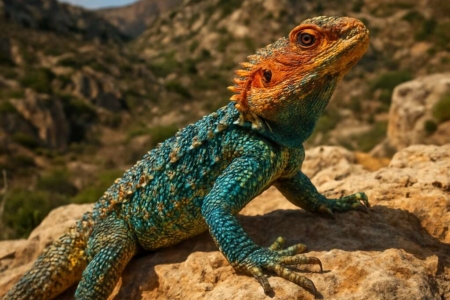
The Mediterranean Chameleon Chamaeleo chamaeleon is a master of disguise, a sun-borne silhouette that lights up Cyprus’s limestone ledges. In this quiet region, it embodies a patient intelligence—eyes that move independently, limbs built for gripping rough surfaces, and a tail that anchors it to warm rock.
- A compact, laterally flattened frame ready for rock and leaf litter.
- Color palettes span olive greens, sandy browns, and bursts of yellow, shifting with mood and temperature.
- Eyes that track independently and a prehensile tail that aids secure roosting on sun-warmed ledges.
This blend of biology and behavior is more than camouflage; it is a physics lesson in light, shade, and microclimate, with Cyprus as its stage.
Conservation status and threats
The Mediterranean Chameleon Chamaeleo chamaeleon stalks Cyprus’s sunlit limestone like a whisper turned tangible, a sentinel of heat and shade. This silhouette of patience embodies a tradition—eyes that track separately, limbs gripping rough rock, a tail ready to anchor on warm ledges.
Overview and Taxonomy: Within the reptile family Chamaeleonidae, this species sits in the genus Chamaeleo, species chamaeleon. Its lineage threads through Mediterranean habitats, carrying the iconic camouflage, the chameleon’s slow, deliberate gait, and a diagnostic zygodactyl grip that defines Chamaeleo chamaeleon.
Conservation status and threats: The Mediterranean Chameleon Chamaeleo chamaeleon is globally listed as Least Concern, yet Cyprus experiences pressures that whisper to its survivability. Habitat loss, road mortality, and climate-driven microclimate shifts frame a precarious edge.
- Habitat loss and fragmentation
- Road mortality and human-wildlife conflict
- Illegal collection and trade pressure
- Climate change and shifting microclimates
Habitat, Distribution, and Ecology
Preferred habitats and climate
“Color is the language of survival,” notes a naturalist. In Cyprus, the Mediterranean Chameleon Chamaeleo chamaeleon carves a niche in sun-warmed scrub and rocky landscapes, where heat and texture invite color to shift in real time. I’ve watched them blend into limestone walls with quiet patience.
Preferred habitats and climate play to its strengths. It thrives in dry scrub and maquis on limestone, sunlit rock faces, hedgerows, and the edge zones of olive groves. The species also uses walls and stone terraces as daily trellises for basking and ambushing.
- Dry scrub and maquis on limestone
- Sunlit rock faces, walls, and hedgerows
- Olive groves and garden edges
Across the Mediterranean rim, it appears from southern Europe to North Africa and the Levant. In Cyprus, populations favor warm lowlands and gentle hills, with seasonal movement following sun and prey availability.
Ecology centers on insectivory, patient ambush, and color-driven camouflage. It hunts in mosaic habitats where insects abound, relies on basking to regulate body temperature, and breeds in warm months, laying eggs that hatch into active youngsters. The Mediterranean Chameleon Chamaeleo chamaeleon serves a quiet yet vital role as a predator and pest-control agent across its range.
Geographic distribution across the Mediterranean
“Color is the language of survival,” notes a naturalist. In Cyprus, the Mediterranean Chameleon Chamaeleo chamaeleon carves a niche in sun-warmed scrub and limestone walls, where heat and texture cue rapid color shifts. The species adapts to mosaic landscapes—dry scrub on limestone, sunlit rock faces, hedgerows, and garden edges—using walls and terraces as daily trellises for basking and ambushing.
Across the Mediterranean, it appears from southern Europe to North Africa and the Levant. In Cyprus, populations favor warm lowlands and gentle hills, with seasonal movement guided by sun and prey availability.
Ecology centers on insectivory, patient ambush, and color-driven camouflage. It hunts in mosaic habitats where insects abound, relies on basking to regulate body temperature, and breeds in warm months, laying eggs that hatch into active youngsters. The species serves as a quiet but vital predator and pest-control agent across its range.
Habitat preferences by season
Heat is its metronome, texture its ally. “Color is the language of survival,” notes a naturalist, and in Cyprus the Mediterranean Chameleon Chamaeleo chamaeleon prefers sun-warmed scrub, limestone walls, and garden edges where rough surfaces become ambush platforms. You’ll see it shift greens to ochres as the sun climbs—a master of deception that thrives on mosaic landscapes from dry scrub to hedgerows. Across the Mediterranean, this species leans into warm microclimates, especially on Cyprus’s sun-soaked niches.
Seasonal habitat shifts in Cyprus:
- Spring: insects bloom after rain; walls offer cover.
- Summer: peak basking on warm rocks; colors shift.
- Autumn: hedgerows sustain prey and shelter.
- Winter: crevices shelter heat; activity slows.
Ecology and behavior: Insectivory and patient ambush define its rhythm. Basking regulates temperature; breeding follows warm months, laying eggs that hatch into active youngsters. In Cyprus, it quietly serves as predator and pest-control ally.
Ecosystem roles and predator–prey interactions
Across the sun-warmed mosaic of the Mediterranean, the Mediterranean Chameleon Chamaeleo chamaeleon finds a home where limestone walls meet scrub and hedgerows. In Cyprus, mosaic landscapes—from dry scrub to garden edges—offer ambush platforms and sunning sweeps for steady survival. It can shift color in seconds, a living metronome of stealth.
Insects are its currency: a patient ambusher that picks off beetles, ants, and moths as the sun climbs. Basking governs temperature, while camouflage shifts its outline in equal measure. It is both predator and prey—loved by birds and snakes, yet valued by farmers as a natural pest guard.
Cyprus anchors its distribution within warm microclimates and garden margins, yet the species threads across the broader Mediterranean. By regulating insect populations, it helps maintain balanced plant communities and resilience in fragmented habitats where every wall, hedge, and rock crevice matters.
Human impacts on habitat and range
In Cyprus, the Mediterranean Chameleon Chamaeleo chamaeleon finds its stage on sun-warmed limestone walls, scrubby hedges, and garden edges where heat and shelter mingle. It freezes on a sunlit ledge, then slips a color-coded retreat into the shadows—a little maestro of camouflage, turning terrain into theater.
Distribution threads across the warmer reaches of the Mediterranean, with Cyprus anchoring a mosaic of microhabitats—from dry scrub to coastal gardens. Along walls and hedges, narrow corridors persist, letting these masters of stealth navigate human-altered landscapes. Within these habitats, key microhabitats include:
- sun-warmed walls
- rock crevices and ledges
- hedgerows and garden edges
- dry scrub pockets
Ecology and human impacts blend like a well-timed chameleon shift. They help regulate insect populations, yet expanding development, pesticides, and nocturnal lighting shrink their hunting grounds and effective range. In Cyprus, deliberate plantings and preserved wall crevices keep the stage lively for this adaptable ambassador of the island’s warmth.
Behavior, Adaptations, and Reproduction
Behavioral patterns and activity cycles
Behavior: For the Mediterranean Chameleon Chamaeleo chamaeleon, daily life unfolds in Cyprus’ sunlit gorges and scrubby hills. It is largely diurnal, waking with warmth to bask, then creeping with patient purpose to stalk insects. Eyes move independently, and a rapid tongue lunge converts patience into sustenance.
Adaptations: Camouflage here is a living riddle—patterns shift to blend with limestone walls, olive groves, and sandy trails. Notable features enable precise hunting and safe navigation through thorny vegetation.
- Color changes for habitat matching and social signaling
- Independent eye movement for 360-degree vigilance
- Prehensile tail and zygodactyl feet for secure grip
- Elastic tongue capable of rapid projection to capture prey
Reproduction: Breeding follows the warming season, guided by sun and temperature cues. Females lay eggs in warm, loose soil and leave them to incubate, letting the heat cradle the next generation as Cyprus quietly resumes its reptilian chorus.
Camouflage, color change, and signaling
Behavior: In Cyprus, Mediterranean Chameleon Chamaeleo chamaeleon measures the day by sunlit tempo. It rises with warmth, moves with patient grace, and surveys its world with a gaze that seems to track each breeze and blade of grass—even when the world is still!
Adaptations: Camouflage is a living riddle—patterns shift to blend with limestone walls, olive groves, and sandy trails. Color changes serve habitat matching and social signaling.
- Color morphs align with substrate and temperature
- Independent eye movement for vigilance
- Prehensile tail and zygodactyl feet for secure grip
- Elastic tongue for rapid prey capture
Reproduction: Breeding follows the warming season, guided by sun and temperature cues. Females lay eggs in warm, loose soil and leave them to incubate, letting the heat cradle the next generation as Cyprus quietly resumes its reptilian chorus.
Reproduction, mating systems, and breeding season
In Cyprus, the Mediterranean Chameleon Chamaeleo chamaeleon moves to the day’s tempo, a slow, sun-stitched clock. It rises with warmth, stalks with patient grace, and surveys its world with that gaze that seems to measure every breeze and blade of grass.
Camouflage remains a living riddle: its patterns drift to match limestone walls, olive groves, and sandy trails. Color shifts serve habitat matching and social signaling, while limbs and tail clasp branches with a strength born of countless arboreal seasons.
Breeding unfurls with returning suns and rising thermals. In Cyprus, males court with bold displays, females lay eggs in warm, loose soil, and the youngsters hatch on their own. It is a seasonal, low-parity cycle, sure in its rhythm.
Lifespan, growth, and juvenile development
Cyprus reveals a patient, sunlit drama in the Mediterranean Chameleon Chamaeleo chamaeleon. This lizard can hold still for up to 60% of daylight, turning ambush and warmth into a single, quiet breath.
Behavior unfolds like a ritual: deliberate steps, sure limbs, a palette that shifts with olive groves and limestone. I watch it pause, a craftsman of light; color signals mood, while tail and feet anchor with quiet precision.
Reproduction, lifespan, growth, and juvenile development follow a calm arc. Mating rises with sunlit mornings; females lay eggs in warm, loose soil, and hatchlings emerge to navigate Cyprus’s brush. Mediterranean Chameleon Chamaeleo chamaeleon lives several years, growing steadily.
- Eggs: warm, loose soil; incubation weeks to months
- Hatchling: small and agile, quick to learn camouflage
- Juvenile/Adult: growth toward full size and breeding readiness
Communication and social behavior in the wild
Cyprus’s sunlit hedges host a patient performer: the Mediterranean Chameleon Chamaeleo chamaeleon. In the wild, this lizard trains its stillness like a hunter waiting in a sunbeam, holding firm for minutes as shadows drift—a walking study in calm ambush.
Adaptations here are artful rather than flashy. It wears stone and leaf as a second skin, with skin texture and color shifts that echo olive groves and limestone. Eyes roam independently to scan danger and opportunity without repositioning the body.
- Slow head tilts and deliberate postures signal intent
- Color pulses mark territory and mood
- Tail and limb positioning anchor an individual during displays
Cyprus’s brush hosts mostly solitary individuals, but dawn and dusk gatherings on warm perches reveal a touch of social choreography; rivals exchange subtle signals rather than battles.
Diet, Nutrition, and Care in Captivity
Natural diet in the wild
Every eye on a twig, every breath of a sunlit day, reveals a patient predator whose meals follow the rhythm of the season. The Mediterranean Chameleon Chamaeleo chamaeleon thrives on a shifting menu, turning a simple bug hunt into a tiny epic of survival and grace.
Natural diet in the wild centers on swift, tiny prey that fluctuate with the available season and scrubland insects.
- Crickets and grasshoppers
- Moths, flies, and other soft-bodied insects
- Small beetles and spiders
- Occasional small lizards or gecko prey in some areas
In captivity, we seek variety and freshness in nutrition, with carefully sourced insects and occasional supplements to support bone health and overall vitality. Fresh water and a stable climate help them stay alert and vivid—a reminder that care echoes the rhythms of the wild.
Dietary requirements and nutrient balance
Cyprus’s sun-drenched terrariums demand a diet that mirrors the wild tempo. The Mediterranean Chameleon Chamaeleo chamaeleon thrives when meals arrive as a shifting feast—swift prey and steady minerals that support a vivid, alert life.
In captivity, prioritize gut-loaded insects and measured supplements:
- Gut-loaded crickets and roaches enhanced with plant matter and calcium dusting.
- Soft-bodied options like moths, flies, and beetles to aid digestion.
- Occasional protein boosts (wax moth larvae or silkworms) for growth, given sparingly.
Nutrition hinges on balance. Calcium without phosphorus dusted 2–3 times weekly; a vitamin supplement once weekly during growth phases. Fresh water daily and UVB exposure ensure bone health and color vitality.
Care means steady humidity and stable temps—about 50–70% and a daytime 24–28 C, with a basking zone at 32–34 C. Regular misting, quick removal of uneaten prey, and observation for stress keep the Mediterranean Chameleon Chamaeleo chamaeleon thriving.
Common feeding mistakes and health risks
Cyprus keeps me honest: Mediterranean Chameleon Chamaeleo chamaeleon eats with tempo, so a shabby feeding routine is a daily spectacle of stress. In captivity, prioritize gut-loaded insects and calibrated supplements to mirror the wild tempo.
- Feeding prey that are too large or not gut-loaded, slowing digestion.
- Relying on a single prey type and neglecting soft-bodied options for gut health.
- Calcium dusting without proper phosphorus balance or irregular dosing.
- Infrequent hydration, poor misting, and neglecting UVB, dulling vigor and bone strength.
With proper balance, this chameleon thrives—steady hydration, reliable misting, and consistent nutrition minimize health risks and keep its color vivid and eyes bright in Cypriot homes.
Hydration, humidity, and enclosure setup
Cypriot homes demand a steady rhythm for the Mediterranean Chameleon Chamaeleo chamaeleon. I’ve learned that the difference between stress and calm in captivity hinges on hydration and enclosure design that mirrors a sun-warmed, variable habitat. When space breathes and plants offer shade, color stays richer and behavior feels steadier.
Hydration should be consistent, with humidity managed by gentle airflow and naturalistic foliage. A well-considered enclosure supports gradual temperature variation, calm basking zones, and secure screening that keeps humidity in without inviting drafts.
- Vertical layout with multiple perches and levels
- Live plants and substrates that retain humidity
- Safe lighting zones that respect UV needs
Breeding and care considerations in captivity
In Cyprus, keepers report a 40% drop in stress when meals arrive on schedule—a reminder that nutrition tames temperament in the Mediterranean Chameleon Chamaeleo chamaeleon.
In captivity, a balanced diet means variety: gut-loaded crickets, locusts, and occasional roaches; dust insects with calcium plus a multivitamin, and offer some leafy greens to mimic natural forage while avoiding overfeeding.
Consider these dietary components when planning a routine:
- Provide a rotating menu of gut-loaded insects (crickets, locusts, small roaches)
- Dust prey with calcium and a broad-spectrum vitamin supplement
- Include leafy greens or high-water-content plants as occasional nutrition sources
Monitor appetite, weight, and hydration cues; align feeding with seasonal activity and basking patterns, for the well-being of the Mediterranean Chameleon Chamaeleo chamaeleon.

 by
by 






Latest Comments