

Cyprus Whip Snake (endemic) Hierophis cypriensis: A secretive cliffside reptile of Cyprus
- January 7, 2026
- Reptiles
 by Potamos Guest House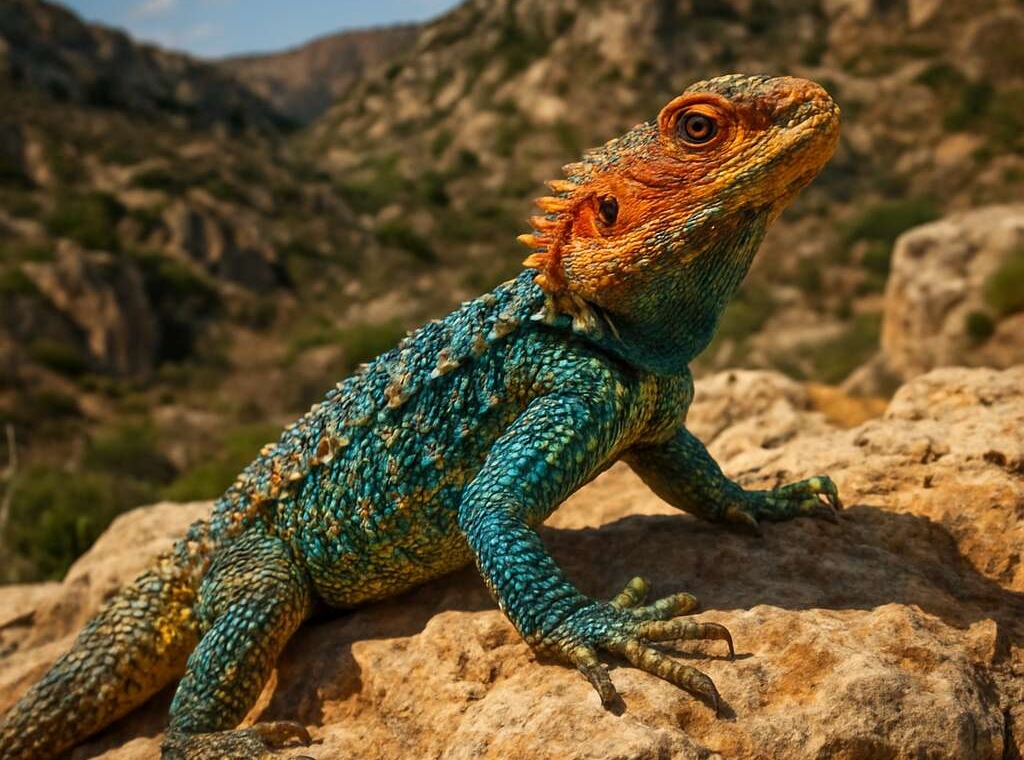
Within the intricate tapestry of Cyprus’ unique biodiversity, the Agama Lizard (endemic ssp.) Laudakia stellio cypriaca occupies a distinctive space. This subspecies is not merely a variation of Laudakia stellio but a testament to the island’s evolutionary isolation, subtly diverging through centuries of adaptation. Its placement within the Agama genus signals a close relationship with other Laudakia species, yet its endemic status highlights a fascinating narrative of geographical specialization.
Taxonomically, Laudakia stellio cypriaca belongs to the Agamidae family, renowned for their adaptive versatility and striking appearances. This subspecies shares the genus with several others, such as Laudakia aravensis and Laudakia nupta, yet its specific evolutionary lineage is confined solely to Cyprus. This geographical boundary confers a unique set of morphological traits and behavioral patterns, distinguishing it from mainland relatives.
The subtle yet significant divergence of Agama Lizard (endemic ssp.) Laudakia stellio cypriaca underscores how isolated habitats forge evolutionary identity. Its taxonomic position reinforces the importance of understanding biogeographical influence in shaping species, particularly for those endemic to specific regions like Cyprus.
When it comes to Cyprus’s extraordinary biodiversity, few creatures embody the island’s evolutionary quirks quite like the Agama Lizard (endemic ssp.) Laudakia stellio cypriaca. This charismatic reptile isn’t just a pretty face; it’s a living testament to how geographic isolation can craft a unique species. Found exclusively within Cyprus, this subspecies has developed distinct traits that set it apart from its mainland relatives, making it a fascinating subject for both herpetologists and casual nature lovers alike.
The distribution of Laudakia stellio cypriaca is confined to specific habitats across the Cypriot landscape. It predominantly inhabits rocky outcrops, sun-baked hillsides, and dry stone walls that provide the perfect vantage points for spotting prey or basking in the glorious Mediterranean sunshine. This restricted range not only underscores its endemic status but also highlights how island environments serve as natural laboratories for evolution—kinda like nature’s own Houdini, pulling a bunny out of the evolutionary hat.
Being endemic to Cyprus, the Agama Lizard (endemic ssp.) Laudakia stellio cypriaca enjoys a geographic range that’s more confined than a seaside café menu. It’s a species whose existence is intricately woven into the island’s ecological fabric, often found flicking its tail amidst the rugged terrain. This localized endemism underscores the delicate balance of Cyprus’s biodiversity, where even a small change in habitat can ripple through the species’ entire existence.
To put it plainly, Laudakia stellio cypriaca isn’t just another reptile cruising the Cypriot hills; it’s a living emblem of island endemism. The specific habitats it calls home are vital for its survival, and their preservation plays a crucial role in safeguarding this remarkable species. After all, a species whose entire universe is contained within one island is as charmingly fragile as it is fiercely resilient—someone’s gotta keep the rocky hideaways safe, right?
The distribution of the Agama Lizard (endemic ssp.) Laudakia stellio cypriaca presents a fascinating case study in localized population dynamics. Native exclusively to Cyprus, this subspecies tends to cluster in regions where its preferred habitats—rocky outcrops, sun-drenched hillsides, and arid stone walls—are most prominent. These sites, scattered across the island’s rugged terrain, are where the highest concentrations of Laudakia stellio cypriaca can be observed, often basking conspicuously in small colonies.
Population density varies significantly depending on habitat quality and protection status. The Ayios Ermolaos and Pentadaktylos mountain ranges, in particular, serve as strongholds for this endemic reptile, with some sites hosting surprisingly dense groups. These locations offer the perfect blend of shelter and basking opportunities, making them hotspots for herpetologists and dedicated admirers alike. The subspecies’ preference for such habitats underscores its tightly woven relationship with the Cypriot landscape.
Given the narrow range and specialized habitats, the distribution patterns of Laudakia stellio cypriaca are remarkably patchy—like a carefully curated mosaic, each piece vital to its overall survival. It’s a living reminder that even within a small island nation, the tapestry of biodiversity can be both vibrant and exquisitely fragile.
The range map of Agama Lizard (endemic ssp.) Laudakia stellio cypriaca offers a compelling visual story of its limited yet vital distribution on the island of Cyprus. Unlike widespread reptiles, this subspecies is primarily confined to specific ecological corridors that crisscross the rugged landscape, emphasizing its delicate habitat connectivity. These ecological pathways are essential for maintaining genetic flow between isolated colonies, which in turn sustains healthy population dynamics.
To better understand its distribution, it’s helpful to look at the primary habitat areas, including rocky outcrops and sun-drenched hillsides scattered across the island. Fragmentation of these habitats poses a significant threat to the subspecies, making the preservation of ecological corridors no less than a necessity. Recognizing the patchwork nature of its habitat distribution can guide conservation efforts—highlighting where intervention might be most effective.
Understanding the connectivity of these habitats is critical for the long-term survival of Agama Lizard (endemic ssp.) Laudakia stellio cypriaca. Effective management of ecological corridors can help ensure this charming lizard remains a part of Cyprus’s unique biodiversity tapestry, even as development pressures increase. With its patchy distribution, this subspecies exemplifies how narrowly focused habitat needs shape the entire ecosystem of the island.
The Agama Lizard (endemic ssp.) Laudakia stellio cypriaca stands out with its striking physical features. They typically measure between 20 to 30 centimeters in length, making them a noticeable presence in their habitat. Their skin pattern is a mosaic of intricate scales, often forming distinctive chevron or mottled designs that help them blend seamlessly into rocky landscapes. The coloration varies from sandy browns and greys to more vibrant shades of orange and yellow, especially during mating season.
One remarkable characteristic of the Agama Lizard (endemic ssp.) Laudakia stellio cypriaca is its tail, which is proportionally long and tapers gracefully, aiding in balance and agility. Their head features a prominent crest running from the snout to the neck— a morphological feature that serves both as a display and a thermoregulatory tool. Size variations are noticeable, with males generally larger and more vividly colored than females, a trait that enhances identification of this endemic Cyprus species.
The Agama Lizard (endemic ssp.) Laudakia stellio cypriaca presents a captivating silhouette against Cyprus’s rocky vistas. Measuring between 20 to 30 centimeters, their elongated bodies are a marvel of natural adaptation. Their skin, a mosaic of mottled patterns ranging from sandy browns to vibrant oranges during mating season, acts as a living tapestry blending seamlessly with the sun-baked stones and rugged cliffs they call home.
Identification of this species hinges on their distinctive features—most notably, their long, tapering tail that enhances agility and balance amidst steep crags. The head flaunts a prominent crest, running from snout to neck, which functions as both a visual display and a thermoregulatory tool. During breeding season, sexual dimorphism becomes strikingly apparent: males tend to be larger, flaunting brighter colors and a more conspicuous crest, making it easier for observers to distinguish between males and females.
This dance of morphological traits, amplified during breeding, underscores the evolutionary artistry embedded in each Agama Lizard (endemic ssp.) Laudakia stellio cypriaca—a true testament to Cyprus’s unique biodiversity. Their physical characteristics, from skin pattern to size differences, create an enchanting silhouette that speaks to their resilient place in the island’s rugged landscape.
The Agama Lizard (endemic ssp.) Laudakia stellio cypriaca exemplifies the elegance of natural design, with its developmental journey revealing intriguing shifts in appearance and behavior. Juveniles of this species, newly minted and full of youthful exuberance, sport a duller, more subdued mosaic of skin patterns. Their diminutive size—typically around 10 to 15 centimeters—contrasts sharply with the robust stature of adults, marking their youthful exuberance. These hatchlings are quite the acrobats, darting among the rocky crevices of Cyprus with an uncanny agility that hints at their future prowess.
As they mature, a metamorphosis unfolds, virtually rewriting their physical identity. Adult Agama Lizard (endemic ssp.) Laudakia stellio cypriaca exhibit vivid coloration, particularly during the breeding season, with males displaying brighter oranges and yellows to attract mates. Their size can reach up to 30 centimeters, and their skin pattern becomes more defined—a living mosaic tailored to camouflage amid Cyprus’s rugged terrain. The behavioral repertoire also broadens, with mature lizards becoming territorial and more conspicuous, often basking in the sun with an air of confidence that can only be earned through years of survival in arid habitats.
This developmental progression—from humble hatchlings to dominant, colorful adults—embodies the stunning evolutionary artistry of the Agama Lizard (endemic ssp.) Laudakia stellio cypriaca. Their transformation not only highlights the distinct sexual dimorphism but also underscores their strategic adaptations for survival and social interaction on Cyprus’s rugged coastal regions and sun-baked cliffs. It’s as if each phase tells a story of resilience and subtle allure, woven seamlessly into the rocky tapestry of the island’s landscape.
The Agama Lizard (endemic ssp.) Laudakia stellio cypriaca stands out among other Laudakia subspecies thanks to its distinctive physical traits. Unlike its relatives, this subspecies boasts a vibrant coloration during the breeding season, with males flaunting bold oranges and yellows that captivate both mates and observers. Its size, typically reaching up to 30 centimeters, allows it to command space on the rugged Cypriot cliffs where it makes its home. The skin pattern on Laudakia stellio cypriaca is a finely detailed mosaic, blending seamlessly into the rocky landscape, providing excellent camouflage from predators.
When comparing Laudakia stellio cypriaca with other Laudakia subspecies, several traits set it apart. For instance, its coloration is notably more vivid during mating months than many mainland counterparts. Additionally, the skin pattern is often more intricate, appearing almost like a natural tapestry. This subspecies also exhibits sexual dimorphism, with males developing brighter hues and larger size during the breeding season, providing a visual cue to rivals and potential mates.
What truly makes Laudakia stellio cypriaca fascinating is how these physical differences serve strategic survival purposes. The vivid colors not only attract females but also act as a thermoregulatory mechanism—absorbing warmth from Cyprus’s sun-baked rocks. Meanwhile, the subdued hues of juveniles help them blend into their surroundings, warding off predators as they develop the skills needed for survival in this arid environment.
When the sun hits Cyprus, the lively antics of the Agama Lizard (endemic ssp.) Laudakia stellio cypriaca turn into a captivating spectacle. These charismatic creatures boast a daily routine that’s both a lesson in thermoregulation and a masterclass in reptilian survival tactics. Their behavior is characterized by a delicate dance between basking in the warm Mediterranean sun and darting into their rocky hideouts at the slightest hint of danger. Their basking behavior isn’t merely soaking up rays; it’s an intricate process that helps regulate their body temperature, especially given Cyprus’ fluctuating climate.
Feeding on a diet primarily composed of insects, the Agama Lizard (endemic ssp.) Laudakia stellio cypriaca is an opportunistic hunter. They forage actively during the sunlit hours, stalking crickets, beetles, and other small invertebrates with keen eyesight and impressive agility. Their foraging habits are crucial since they help maintain the delicate balance of their habitat, which is often rocky and sparsely vegetated. During the breeding season, males become territorial, fiercely defending their preferred basking spots and hunting territories from rivals.
Their reproductive habits involve quick, energetic displays of territoriality and courtship. Males often perform impressive head-bobbing and color-changing displays to attract females, highlighting the sexual dimorphism that makes the Agama Lizard (endemic ssp.) Laudakia stellio cypriaca a fascinating subject of study. Juveniles, with their smaller size and less vibrant markings, tend to stay close to rocky shelters, gradually developing the bold coloration and behaviors seen in adults. In their daily lives, these lizards exemplify a perfect balance of energetic activity, strategic hiding, and precise thermoregulation—traits that make the Agama Lizard (endemic ssp.) Laudakia stellio cypriaca a true flagship of Cyprus’s unique reptilian fauna.
In the rugged landscapes of Cyprus, the Agama Lizard (endemic ssp.) Laudakia stellio cypriaca reveals itself as a masterful predator and clever forager. This charismatic reptile’s diet centers on a variety of insects, making it an opportunistic hunter that seizes small prey with impressive agility. Crickets, beetles, and other invertebrates constitute the bulk of their main food sources, which they diligently stalk during the warm Mediterranean sun. Their foraging strategies involve quick, precise movements—gliding from one rock crevice to another—allowing them to catch moving prey with remarkable accuracy.
The agility of the Agama Lizard (endemic ssp.) Laudakia stellio cypriaca also plays a vital role in maintaining the delicate balance of Cyprus’s rocky environments. By actively hunting during the sunlit hours, they help control local insect populations, contributing to the health of their habitat. During territorial disputes or when threatened, they showcase a range of aggressive behaviors to defend their foraging zones, demonstrating the fierce independence that defines them.
In the breeding season, males display their territorial bravado through eye-catching courtship rituals, such as head-bobbing and vibrant color changes. These energetic displays serve to attract females and establish dominance, ensuring reproductive success. Juvenile Agama Lizard (endemic ssp.) Laudakia stellio cypriaca tend to stay close to retreating rocky shelters, gradually developing the bold markings and assertive behaviors of adult lizards, a fascinating transformation witnessed in their developmental journey.
The dietary habits of the Agama Lizard (endemic ssp.) Laudakia stellio cypriaca exemplify their adaptability and predator savvy, making them a vibrant chapter of Cyprus’s unique reptilian fauna and a testament to their survival prowess in the Mediterranean’s rugged terrain.
In the rugged, sun-baked landscapes of Cyprus, the Agama Lizard (endemic ssp.) Laudakia stellio cypriaca exhibits a fascinating blend of agility and adaptive prowess. These charismatic reptiles are not just striking in appearance but also display complex behavioral and reproductive traits that underline their survival in this unique environment.
Behaviorally, the Agama Lizard (endemic ssp.) Laudakia stellio cypriaca is an active daylight forager, constantly on the move across rocky surfaces. Their quick, calculated movements enable them to catch a variety of insects, including crickets and beetles, which form the main thread of their diet. During the intense Mediterranean heat, they bask on sunlit rocks, then swiftly retreat into crevices at the slightest hint of threat, showcasing a delicate balance of thermoregulation and vigilance.
Regarding reproductive habits, males exhibit energetic courtship behaviors—head-bobbing, vibrant color shifts, and elaborate displays aimed at attracting females and establishing dominance. During the breeding season, males often perform territorial displays that serve as visual signals of strength and health. Females, after choosing their mate, lay clutch eggs in secure, sheltered nesting sites nestled within rocky outcrops. A typical clutch size of about 4 to 8 eggs ensures the continuation of this resilient endemic species.
The breeding cycle is a vivid spectacle, often marked by standout sexual dimorphism: males boast brighter coloration, notably more pronounced markings and larger size, whereas juveniles display less defined patterns that develop into the bold markings characteristic of adults. The transformation from juvenile to adult is a gradual evolution, culminating in a display of assertive behaviors and spectacular morphological differences.
The Agama Lizard (endemic ssp.) Laudakia stellio cypriaca’s reproductive mode centers on their territorial nature and keen visual displays. This strategic approach not only enhances reproductive success but also fortifies their role within Cyprus’s delicate rocky ecosystems. Their distinctive behaviors, from quick prey capture to vibrant mating rituals, make them an intriguing symbol of the island’s unique reptilian fauna.
The behavior of the Agama Lizard (endemic ssp.) Laudakia stellio cypriaca offers a captivating glimpse into how this species has evolved to thrive in Cyprus’s rugged terrain. These diurnal reptiles are relentless foragers, constantly scanning their rocky environment for insects such as crickets and beetles. Their active lifestyle reflects a finely tuned thermoregulatory instinct—they bask on sun-warmed stones and retreat to crevices when the heat becomes too intense. This daily activity pattern ensures their survival amidst the Mediterranean’s fluctuating climate.
Social interactions among Laudakia stellio cypriaca are as vivid as their coloration. During the breeding season, males perform elaborate courtship displays, including head-bobbing, displaying vibrant color shifts, and territorial posturing. These behaviors are not just about attracting females—they also serve as intimidation tactics against rival males. Territoriality is pronounced, with males defending their chosen rocky outcrop fiercely, often engaging in aggressive bouts to maintain dominance.
They often exhibit an ordered hierarchy, with dominant males claiming prime basking spots and nesting sites. This aggression is a natural part of their reproductive strategy—protecting eggs ensures their genetic lineage continues, even in a habitat that can be both harsh and competitive. Females prefer nesting in sheltered crevices, laying clutches of about 4 to 8 eggs, which develop fully in relative safety.
The visual cues in their social dance are remarkable. Males show a spectrum of bold markings, larger size, and more intense coloration than females. Juvenile forms are less vividly patterned, gradually acquiring the distinctive adult features. These morphological changes reflect an ontogenetic journey that emphasizes the species’ adaptability, even as it maintains its endemic status within Cyprus.
In essence, the Agama Lizard (endemic ssp.) Laudakia stellio cypriaca embodies an intricate balance of aggression, territoriality, and reproductive finesse—traits that have allowed this charming reptile to flourish in one of the Mediterranean’s most rugged environments. Their behaviors not only underscore their resilience but also serve as testament to the delicate mechanisms that sustain endemic species within isolated ecosystems.
The Agama Lizard (endemic ssp.) Laudakia stellio cypriaca exemplifies a captivating blend of behavioral resilience and physiological adaptation, finely tuned to the rugged landscapes of Cyprus. These diurnal reptiles are active explorers, their daily routines governed by a delicate thermoregulatory instinct that drives them to bask on sun-warmed stones, drawing energy from the Mediterranean’s variable climate. Their foraging strategies reflect an opportunistic diet, primarily consisting of insects such as crickets and beetles—food sources they methodically hunt among the rocky crevices.
Behaviorally, Laudakia stellio cypriaca demonstrates remarkable adaptability through their reproductive and social mechanisms. During the breeding season, males perform intricate displays rooted in visual cues—head-bobbing, color shifts, and territorial posturing—that serve both to entice females and defend perimeters from rival males. Mating rituals are an elaborate dance of dominance and attraction, with females nesting in sheltered crevices, laying clutches of approximately four to eight eggs. These reproductive tactics optimize survival in the island’s often forbidding environment.
In terms of survival adaptations, Laudakia stellio cypriaca exhibits a spectrum of morphological traits that offer protection and aid in habitat utilization. Their skin displays vivid patterns and coloration that blend seamlessly into the rocky surroundings, providing effective camouflage from predators. Juvenile forms differ markedly from adults, with less vivid markings, indicating a gradual ontogenetic development that emphasizes their capacity for blending into their environment as they mature.
It is noteworthy that their territorial behaviors are integrated with social hierarchies, where dominant males secure prime basking and nesting sites—an intricate balance of aggression and cooperation that ensures their persistence amidst Cyprus’s isolated ecosystems. These traits, woven into their daily lives, exemplify the complex interplay between physiology and environment that sustains the endemic ssp. Laudakia stellio cypriaca.
Their adaptations extend further, supporting habitat use with physiological traits equipped to handle the rocky terrain’s rugged challenges. The Agama Lizard (endemic ssp.) Laudakia stellio cypriaca possesses a robust body structure, enabling it to navigate narrow crevices and rocky outcrops efficiently. Their diet, mainly insectivorous by nature, is supplemented with opportunistic foraging, allowing them to exploit available resources while minimizing energetic expenditure.
In an unending cycle of survival, their reproductive habits ensure continuity. Courtship displays, such as vibrant color shifts and territorial posturing, are not merely visual spectacles but vital signals in their reproductive strategy—each act meticulously adapted to reinforce dominance and attract mates within their habitat. This strategic combination of behavior and physiological attributes underscores their resilience, carving out a niche in one of the Mediterranean’s most formidable environments.
The conservation status of the Agama Lizard (endemic ssp.) Laudakia stellio cypriaca provides a fascinating glimpse into the delicate balance of Cyprus’s unique biodiversity. Despite its resilience, this subspecies faces mounting threats that warrant vigilant monitoring and assessment. With habitat loss stemming from urban expansion and agricultural encroachment, the populations are experiencing fluctuations that could jeopardize their long-term viability.
Recent conservation assessments have highlighted the need for ongoing monitoring efforts to track population trends meticulously. Field surveys and ecological studies reveal that the highest densities of the Agama Lizard (endemic ssp.) Laudakia stellio cypriaca tend to cluster in rocky outcrops and shrubland zones—precisely the habitats most vulnerable to disturbance. Conservation organizations are employing innovative methods such as habitat connectivity analysis to ensure ecological corridors remain intact, safeguarding the species’ ability to disperse and thrive.
A sentinel of Cyprus’s endemic fauna, the Agama Lizard (endemic ssp.) Laudakia stellio cypriaca’s current population trend exhibits a cautious optimism, provided that habitat preservation continues to be prioritized. Regular assessments not only illuminate the patterns of its survival but also serve as a poignant reminder of the ongoing need for ecological stewardship—an endeavor that keeps this remarkable reptile from slipping silently into obscurity.
The Agama Lizard (endemic ssp.) Laudakia stellio cypriaca, a vibrant testament to Cyprus’s unique natural tapestry, is increasingly under siege from a multitude of threats that cast shadows over its survival. Its resilience has long been admired, yet the relentless march of habitat destruction threatens to silence its ancient call. Urban development, expanding highways, and sprawling agricultural ventures carve into rock outcrops and shrublands—the very sanctuaries where this lizard once thrived in abundance.
Pollution and invasive species further complicate its plight, eroding the delicate ecological balance that sustains it. The encroachment of non-native flora and fauna introduces disruptive competition and predation, challenging the species’ ability to maintain its fragile foothold in its limited territory. For the Agama Lizard (endemic ssp.) Laudakia stellio cypriaca, these human impacts serve as a potent reminder of the profound influence mankind wields over Cyprus’s endemic wildlife.
Awareness of these threats underscores the urgency of targeted conservation efforts. Protecting ecological corridors and controlling invasive species are vital steps to preserve the habitat connectivity that sustains the integrity of its population clusters. As the landscape shifts beneath the weight of human activity, conserving this resilient lizard demands a vigilant eye, intricate planning, and a harmonious coexistence with Cyprus’s natural heritage.
The conservation status of the Agama Lizard (endemic ssp.) Laudakia stellio cypriaca remains precarious despite ongoing efforts. Its limited range and shrinking habitat make monitoring vital. Population trends show decline trends, underscoring the urgency for targeted intervention. Cyprus’s legal protections now include specific measures for this endemic subspecies, recognizing its ecological importance.
Conservation efforts focus on establishing protected areas and ecological corridors, ensuring the connectivity needed for genetic exchange. These measures help combat habitat destruction caused by urban expansion and agriculture. Controlling invasive species and reducing pollution are also priorities, safeguarding the delicate balance of its habitat. Efforts are complemented by national conservation programs, which involve local communities and stakeholders.
This strategic framework aims to preserve the unique biodiversity of Cyprus, ensuring the survival of the Agama Lizard (endemic ssp.) Laudakia stellio cypriaca. Protecting this resilient species requires continuous vigilance and cooperative action, especially as human impacts threaten its existence.
The survival of the Agama Lizard (endemic ssp.) Laudakia stellio cypriaca hinges on the delicate balance of its habitat. This resilient species, with its vibrant skin patterns and distinctive coloration, faces mounting threats from habitat destruction and environmental changes. As urban expansion encroaches upon their natural territories and agricultural development fragments their range, the urgency for effective habitat preservation becomes clear. It is within our grasp to safeguard these extraordinary creatures through strategic restoration efforts that focus on habitat connectivity and landscape corridors.
Implementing habitat restoration strategies can dramatically improve the living conditions for Laudakia stellio cypriaca. These include planting native vegetation, controlling invasive species, and establishing protected areas that serve as sanctuaries for these lizards. Protection efforts may also encompass the rehabilitation of degraded habitats, ensuring the preservation of critical basking sites and nesting grounds for future generations of this endemic ssp.
Such measures are paramount in curbing the decline of the Agama Lizard (endemic ssp.) Laudakia stellio cypriaca. By fostering resilient ecosystems and fostering community involvement, conservation initiatives lay the foundation for the species’ long-term survival. The path forward involves not only safeguarding their current habitat but also restoring the natural landscape that once teemed with endemic life, ensuring the enduring legacy of Laudakia stellio cypriaca on Cyprus.
When it comes to Cyprus’s most charismatic—and arguably coolest—endemic reptile, the Agama Lizard (endemic ssp.) Laudakia stellio cypriaca certainly holds a starring role. Not merely a testament to nature’s artistry with its vibrant skin patterns and striking coloration, this species also plays a surprisingly pivotal role in its local ecosystem. Despite its modest size, the Agama Lizard (endemic ssp.) Laudakia stellio cypriaca is a vanishing act waiting for the right spotlight, thanks to threats lurking behind urban sprawl and invasive species.
This lizard isn’t just a pretty face; it acts as a natural pest controller, feasting on insects that would make modern pest exterminators envious. As a member of the ecological community, the Agama Lizard (endemic ssp.) Laudakia stellio cypriaca establishes intricate interspecies relationships—interactions that help maintain the delicate balance of native flora and fauna. These reptiles serve as prey for birds and snakes, showcasing their integral role in the food web. Losing such a creature would be like removing a key member from a finely tuned orchestra, leading to disharmony in the local habitat.
Scrutinizing the conservation status of the Agama Lizard (endemic ssp.) Laudakia stellio cypriaca reveals a species on the precipice of peril, primarily due to habitat destruction. Urban expansion, agricultural expansion, and climate change threaten its survival. The presence of invasive species, such as non-native plants and predators, further complicates matters, turning the natural landscape into a battleground for native resilience. Preservation efforts aiming to maintain habitat connectivity and establish ecological corridors are crucial to preventing this spectacular endemic from slipping into oblivion.
Protection measures often focus on safeguarding the environments where this lizard thrives. For instance, conservation programs in Cyprus include legal protections and the designation of protected areas, allowing the Agama Lizard (endemic ssp.) Laudakia stellio cypriaca to flourish without human interference. Pollutant control and invasive species removal, paired with habitat restoration, form the core of these initiatives. It’s a small step for mankind, yet a giant leap for the species’ continued existence.
With each passing day, the Agama Lizard (endemic ssp.) Laudakia stellio cypriaca reminds us that extinction can be a very real threat—unless we pay close attention to what’s happening beneath foot and eye level, where these charismatic reptiles weave their survival stories. It’s a fascinating leap in our understanding of local biodiversity, and a call-to-action to ensure future generations can marvel at their vibrant beauty—perhaps even sharing a moment of admiration with one of Cyprus’s most endemic inhabitants.


Taxonomy and Nomenclature Taxonomic Classification and Subspecies Across Cyprus’s sun-warmed stones, the Blunt-nosed Viper Macrovipera lebetina lebetina stands as a living archive—its... Read More




Latest Comments