Introduction to the Cyprus Endemic Mesobuthus cyprius
Overview of Mesobuthus cyprius – Biological classification and unique features
The Cyprus Scorpion (endemic) Mesobuthus cyprius is one of those tiny wonders that makes Cyprus uniquely fascinating. Found solely on the island, this scorpion isn’t just another creepy-crawly—it’s a biological gem with a story as intriguing as its venomous sting. Despite its modest size, Mesobuthus cyprius boasts a distinctive appearance that helps it blend seamlessly into the rocky landscape, making it a true endemic marvel.
Biologically, Mesobuthus cyprius belongs to the Buthidae family, a group renowned for their potent venom and intriguing behaviors. What sets the Cyprus Scorpion (endemic) Mesobuthus cyprius apart from its relatives are its specialized exoskeleton patterns and its adaptability to the Mediterranean climate. Its unique features include a slender tail and delicate pincers that hint at a creature designed solely for survival on the sun-baked terrains of Cyprus.
- Endemic to Cyprus, this species exemplifies the island’s rich biodiversity.
- Mesobuthus cyprius’s distinctive coloration provides camouflage among rocky outcroppings.
- Its biological classification places it squarely within the Mesobuthus genus, known for their resilience and striking appearance.
Habitat and Geographic Distribution – Specific regions in Cyprus where it is found
The rugged beauty of Cyprus is accentuated by its unique wildlife, and among its most fascinating residents is the Cyprus Scorpion (endemic) Mesobuthus cyprius. Restricted exclusively to this island, this species inhabits specific regions that truly showcase Cyprus’s diverse landscape. Its presence is mainly concentrated in the rocky outcroppings and arid terrains where the sun’s relentless heat transforms the environment into a natural shelter.
Mesobuthus cyprius favors areas with sparse vegetation, often hiding beneath stones and within crevices. Its habitat spans several distinct regions, but it is particularly prevalent in the mountain ranges and coastal rocky zones of Cyprus. These locations provide the perfect terrain—warm, dry, and rugged—that the Cyprus Scorpion (endemic) Mesobuthus cyprius needs to thrive. The species’ ability to adapt to these challenging environments highlights not only its resilience but also its importance as a symbol of the island’s unparalleled biodiversity.
- Troodos Mountains
- Akamas Peninsula
- The coastal rocky shores of Paphos and Limassol
Importance of Studying an Endemic Species – Ecological and conservation significance
In the delicate tapestry of Cyprus’s unique wildlife, the Cyprus Scorpion (endemic) Mesobuthus cyprius emerges as a symbol of resilience and ecological intrigue. Its very existence underscores the importance of understanding and conserving the island’s endemic species, which often inhabit the most rugged and less accessible regions, embodying both danger and beauty.
Studying the Cyprus Scorpion (endemic) Mesobuthus cyprius offers invaluable insights into evolutionary adaptation and biodiversity preservation. These creatures, finely tuned to thriving amid Cyprus’s rocky terrains and arid climates, remind us of nature’s capacity for intricate survival mechanisms. Protecting this species ensures the preservation of Cyprus’s renowned endemic flora and fauna, enriching the island’s natural heritage for generations to come.
Physical Characteristics and Identification
Morphology and Size – Distinctive physical features and measurements
The Mesobuthus cyprius, or the Cyprus Scorpion, is a creature shrouded in subtle intrigue, their physical features blending quietly into their arid surroundings. These endemic scorpions exhibit a compact, robust morphology that serves as a testament to their evolutionary resilience. Measuring approximately 6 to 8 centimeters, the Cyprus Scorpion’s size is both unassuming and precise, making it an ideal subject for morphological studies. Their exoskeleton bears a distinctive amber hue, interspersed with darker mottling that camouflages them effortlessly within the rocky terrain of Cyprus. The tail, notably thick and slightly curved, arches upward over their body, a defensive posture that hints at their alert nature. The pincers are strong but proportionate, capable of gripping prey with a calculated strength that underscores their readiness to survive in a demanding environment. The physical characteristics of the Cyprus Scorpion (endemic) Mesobuthus cyprius are truly a marvel in miniature, each feature calibrated by nature to fulfill specific survival functions.
Coloration and Markings – Color patterns unique to Mesobuthus cyprius
In the quiet, sun-baked corners of Cyprus lies an arachnid of mesmerizing subtlety— the Cyprus Scorpion (endemic) Mesobuthus cyprius. This creature, cloaked in a tapestry of natural concealment, possesses physical characteristics that make it a marvel of adaptation and resilience. Their coloration is a masterstroke of blending, with an amber exoskeleton adorned with darker mottling that perfectly mimics the rocky terrain of iconic Cypriot landscapes.
The unique color patterns of Mesobuthus cyprius serve as a silent testament to their evolutionary mastery, enabling them to evade predators and ambush prey with stealth. Their markings are not just random; they act as nature’s camouflage, transforming them into part of the landscape itself. Often, their carapace exhibits a faint, marbled design that enhances their ability to remain undetected in the arid wilderness.
Physical characteristics of the Cyprus Scorpion (endemic) Mesobuthus cyprius extend beyond coloration. Their robust pincers, capable of gripping with calculated strength, complement a thick, slightly curved tail that arches protectively over their body—an elegant gesture of survival. The size of this endemic species, roughly 6 to 8 centimeters, perfectly balances their mobility and defensiveness.
For enthusiasts and scientists alike, distinguishing Mesobuthus cyprius involves noting their subtle yet captivating colorations: from light amber to dark mottled patches. These patterns are exclusive to this endemic Cyprus species, making them a fascinating subject of study for those intrigued by nature’s artistry and adaptations. Their enigmatic appearance is a continual reminder of how finely tuned evolution can produce such resilient arboreal sculptors of Cyprus’ rugged terrain.
- Amber hue with darker mottling
- Distinctive marbled pattern on the exoskeleton
- Thick, curved tail that arches over the body
- Proportionate pincers capable of precise grip
The physical characteristics and coloration of the Cyprus Scorpion (endemic) Mesobuthus cyprius weave an intricate story of camouflage and evolutionary craftsmanship. Their visual signature, so finely tuned to their environment, continues to fascinate those who marvel at the complexities of endemic species thriving amid Cyprus’ rugged beauty.
Behavioral Traits – Habits and activity patterns observed in Cyprus populations
The physical characteristics and behavioral traits of the Cyprus Scorpion (endemic) Mesobuthus cyprius unveil a creature as resilient as it is enigmatic. With a length averaging between 6 to 8 centimeters, this endemic arachnid exudes a compact strength that’s perfectly suited to its rugged habitat. Its thick, slightly curved tail arches over its body in a graceful yet defensive gesture, a silent guardian of its existence. The sturdy pincers, capable of precise grip, hint at a predator’s finesse in the arid landscapes of Cyprus.
Mesobuthus cyprius is predominantly nocturnal, retreating into crevices and beneath stones during the scorching daylight hours. As the sun dips below the horizon, it becomes active, hunting for small insects with calculated patience. Their camouflage, featuring amber hues with darker mottling, perfectly complements the rocky terrain—a masterclass in natural concealment. This behavioral trait not only ensures survival but also reflects their finely tuned evolutionary adaptation to the environment.
- They often exhibit solitary habits, establishing territories that they defend with subtle menace.
- During peak activity periods at night, their movements are deliberate and cautious, avoiding unnecessary confrontations.
- Their sense of danger is heightened, triggering defensive postures when disturbed or threatened.
Veritable sculptors of their environment, the Cyprus Scorpion (endemic) Mesobuthus cyprius exemplifies nature’s artistry in form and function. Their blend of physical robustness and behavioral precision makes them a creature of fascination—an unassuming yet vital thread in Cyprus’ ecological tapestry. Observing their habits reveals a creature perfectly adapted to survive and thrive amid the rugged beauty of their exclusive island domain.
Ecology and Behavioral Insights
Habitat Preferences – Preferred microhabitats and ecological niche
Beneath the sun-drenched rocky outcrops and sandy alcoves of Cyprus, the Cyprus Scorpion (endemic) Mesobuthus cyprius carves out an ecological niche that is as intriguing as it is vital. These creatures prefer microhabitats that offer a delicate balance of shelter and warmth, such as the crevices of limestone cliffs or the labyrinthine burrows beneath fallen debris. Their preference for these microhabitats is no coincidence; it allows them to regulate their body temperature while avoiding predators, showcasing a finely tuned behavioral adaptation.
In terms of habitat preferences, Mesobuthus cyprius thrives in semi-arid terrain, where arid warmth meets sparse shrubbery—an ecological haven that sustains their existence. Their nocturnal nature ensures they remain active when the air cools after sunset, darting between hiding spots with an almost spectral agility. The interplay between their preferred microhabitats and the ecological niches they occupy emphasizes their role as both predator and prey within Cyprus’s fragile environment.
- Rock crevices
- Sandy soil
- Leaf litter and debris
Such microhabitats sustain their delicate balance between survival and adaptation, making Mesobuthus cyprius a captivating example of endemic resilience.
Diet and Predation – Prey species and natural predators
The Cyprus Scorpion (endemic) Mesobuthus cyprius embodies a quiet resilience that echoes through the limestone shadows and sandy alcoves of its native landscape. While many view it as merely a creature of instinct, its behavioral intricacies hint at a profound adaptation to the delicate balance of survival and predation. This species’ nocturnal habits serve as a testament to its uncanny ability to navigate Cyprus’s semi-arid terrain, slipping unseen from one microhabitat to another with spectral agility.
Feeding primarily on small insects, the Cyprus Scorpion (endemic) Mesobuthus cyprius is an opportunistic predator, preying on crickets, beetles, and other invertebrates. Their diet is a deliberate dance of patience and precision, highlighting their role within Cyprus’s fragile ecosystem. Yet, they are not the only ones watching; natural predators such as birds, larger reptiles, and mammals keep the population in check, the predator-prey relationship shaping the very essence of their existence.
In the complex web of life, the Cyprus Scorpion (endemic) Mesobuthus cyprius stands as both hunter and prey. Their nocturnal predation is complemented by cryptic hiding strategies—slipping into crevices and burrows to avoid becoming prey themselves. This delicate equilibrium underscores the importance of microhabitats, such as leaf litter and debris, which serve not only as shelter but as crucial buffers against external threats.
Reproductive Behavior – Breeding cycles and potential lifespan
The reproductive habits of the Cyprus Scorpion (endemic) Mesobuthus cyprius reveal a fascinating glimpse into its survival strategy amid Cyprus’s rugged terrain. This species exhibits a distinct breeding cycle, typically synchronized with the arrival of cooler months, allowing for optimal conditions for offspring development. During this period, females often give birth to live young, called scorplings, which cling to their mother’s back for several days before establishing their first microhabitats. Such reproductive behavior underscores their resilience and adaptability in a semi-arid environment.
Unlike many invertebrates, the Cyprus Scorpion (endemic) Mesobuthus cyprius tends to have a relatively long lifespan, often reaching up to 6 years under favorable conditions. Their longevity enables multiple reproductive cycles throughout their life, ensuring population stability despite predation pressures. Their ability to survive in microhabitats like crevices and debris—where environmental fluctuations are buffered—contributes significantly to their extended lifespan and reproductive success.
Conservation and Human Interactions
Conservation Status and Threats – Current assessment and ecological pressures
Conservation and human interactions surrounding the Cyprus Scorpion (endemic) Mesobuthus cyprius reveal a sobering reality. This rare species, confined exclusively to Cyprus, faces ecological pressures that threaten its fragile existence. Habitat destruction, driven by urban development and agricultural expansion, reduces the microhabitats vital for their survival. As an elusive predator, Mesobuthus cyprius is sensitive to environmental changes that alter its prey availability and microclimate.
The current conservation status indicates a need for heightened awareness and intervention. Encroaching human activity has increased the risk of accidental encounters, which can lead to fatalities or misinformed removals. Protecting the limestone regions and scrublands they inhabit ensures a future where the Cyprus Scorpion remains part of Cyprus’s unique natural tapestry. Promoting awareness about Mesobuthus cyprius is vital, helping communities understand the importance of conserving endemic species before they vanish from the wild.
Protection Efforts in Cyprus – Legal protections and conservation programs
Protection efforts for the Cyprus Scorpion (endemic) Mesobuthus cyprius are taking shape through a combination of legal protections and dedicated conservation programs aimed at safeguarding its fragile habitat. Recognizing the species’ uniqueness and endemic status, Cypriot authorities have implemented measures that focus on preserving limestone regions and scrublands—crucial microhabitats for Mesobuthus cyprius.
Active conservation efforts include habitat restoration initiatives and strict regulation of human activities in sensitive areas. Public awareness campaigns play a pivotal role in fostering community involvement, emphasizing the importance of coexistence with this elusive species. Some organizations advocate for the establishment of protected zones, where sustainable land use maintains ecological balance.
- Legislative acts specifically protect the habitats of Mesobuthus cyprius
- Monitoring programs track population health and habitat conditions
- Community engagement fosters local stewardship and awareness
Through these tailored endeavors, Cyprus reinforces its commitment to preserving this endemic treasure—ensuring that Mesobuthus cyprius continues to thrive amid a changing landscape.
Human Safety and Medical Aspects – Venom toxicity and first aid measures
The Cyprus Scorpion (endemic) Mesobuthus cyprius isn’t just a fascinating creature; it’s a symbol of Cypriot biodiversity and a reminder of our shared responsibility to coexist safely. With its highly localized habitat, this scorpion’s presence highlights the delicate balance within Cyprus’s ecosystems. Human interactions, whether accidental or intentional, can sometimes lead to conflicts—especially since encounters often occur in limestone quarries and rural areas where the Mesobuthus cyprius thrives.
Despite its reputation for venom toxicity, the Cyprus Scorpion (endemic) Mesobuthus cyprius rarely poses serious health threats to humans. The venom, used primarily for prey immobilization, can cause localized pain and swelling, but severe reactions are uncommon. Immediate first aid for a sting includes cleaning the affected area with soap and water and applying an ice pack to reduce swelling. For allergic reactions or symptoms beyond mild discomfort, seeking medical attention is advised.
Public awareness about the Venom toxicity of Mesobuthus cyprius plays a vital role in reducing unnecessary fear. Community engagement initiatives emphasize safety protocols, such as wearing protective footwear in scorpion habitats. Education campaigns also dispel misconceptions, encouraging respect and caution rather than panic. By staying informed, residents and visitors can navigate Cyprus’s rugged terrain while minimizing risks associated with this endemic species.

 by
by 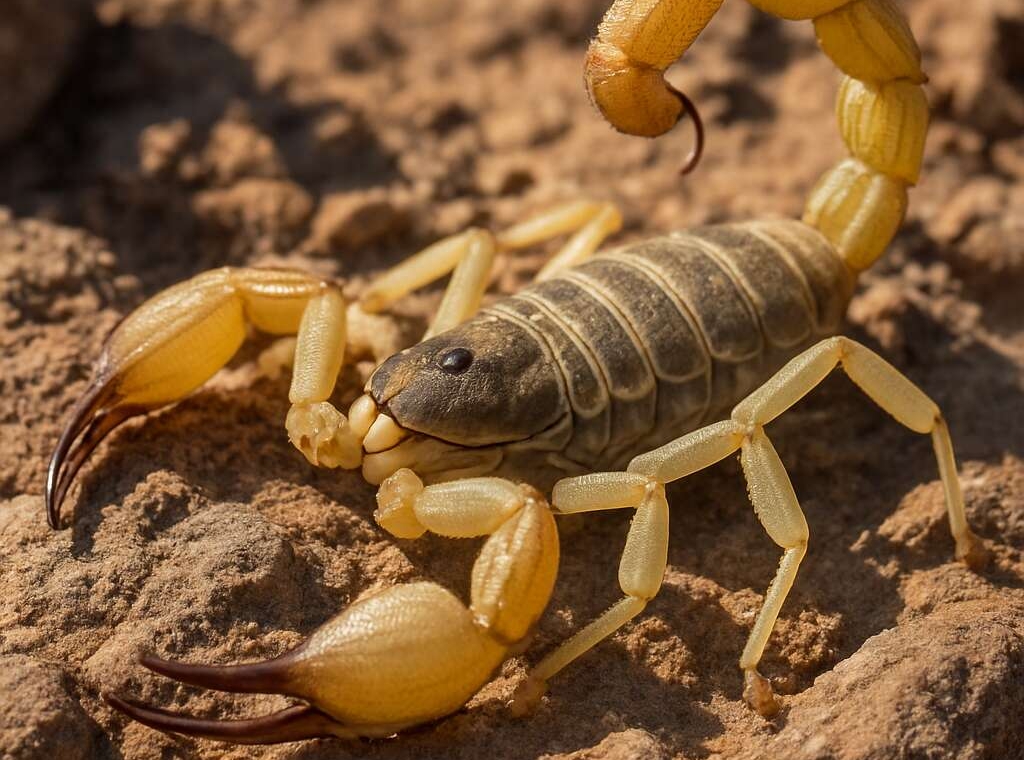




Latest Comments