Physical Characteristics and Identification of Griffon Vultures
Distinctive Features – Descriptions of size, coloration, and unique physical traits
The Griffon Vulture (Gyps fulvus) is an awe-inspiring sight in the sky, with commanding presence and striking features that make it easy to identify. Adults typically measure between 2.8 to 4.5 meters from wingtip to wingtip, a wingspan that speaks to their majestic nature. Their plumage is predominantly pale brown with a slightly darker head, which often appears almost featherless, an adaptation perfectly suited for their scavenging lifestyle.
Distinctive physical characteristics include a strong, hooked beak used for tearing flesh, alongside sharp talons that help them grip carcasses. Their bare, wrinkled neck and striking gaze give the Griffon Vulture a rugged, almost regal appearance. Juvenile Griffon Vultures are often mistaken for their adult counterparts, but they tend to exhibit darker plumage and a browner head, providing visual clues for keen observers.
Notable traits of Gyps fulvus include their sturdy, broad wings with fingered tips, allowing for graceful, soaring flight over expansive landscapes. These physical features not only facilitate their survival but also make the Griffon Vulture an unmistakable emblem of high-altitude wilderness and ancient traditions.
Age and Maturity Indicators – How to identify juvenile versus adult Griffon Vultures
The allure of the Griffon Vulture (Gyps fulvus) lies not only in its regal soar across the sky but also in its subtle signs of age and maturity. For bird enthusiasts and ornithologists alike, understanding how to distinguish juvenile from adult Griffon Vultures is essential, revealing a story written in feathers and stature that spans years. Each phase of development offers a unique window into the bird’s life cycle, showcasing a fascinating evolutionary adaptation of survival and social structure.
Juvenile Griffon Vultures tend to be cloaked in darker, more uniform plumage. Their feathers often appear more sooty and less defined than those of the adults, with a browner, more opaque head that lacks the characteristic pale coloration found in mature Gyps fulvus. This initial appearance is a visual cue that signals less than five years of age, as they gradually shed these darker feathers during their early growth stages.
- As Griffon Vultures mature, their plumage begins to lighten, transitioning from a deep brown to a more pale or beige tone. This change is a hallmark of age, with the bird’s feathers gradually adopting the characteristic coloration seen in mature Gyps fulvus.
- The head, initially fully featherless and darker, becomes increasingly pale with age, often revealing the distinct, almost regal appearance of the adult vulture’s striking gaze.
- Wingspan and body size also serve as subtle indicators—adults display broader, more massive wings with fingered tips, reflecting full physical development.
In fact, the transition from juvenile to adult involves more than mere coloration. The mature Griffon Vulture exudes a certain confidence in flight and presence, with broader wings and a robust neck that speak to their seasoned survival skills. Whether observing soaring Gyps fulvus during a lofty glide or scanning a landscape for carcasses, the physical characteristics that distinguish age become indicators of an ongoing story rooted deeply in their majestic, ancient lineage.
Comparison with Similar Species – Differentiating Gyps fulvus from other vultures
The Griffon Vulture (Gyps fulvus) stands out among European raptors with its impressive wingspan and soaring grace. With a wingspan that can reach up to 2.8 meters, this majestic bird commands the skies. Its physical characteristics are hard to miss: a stocky body, broad wings, and a striking pale head that contrasts sharply with its darker body in adults. These features help bird enthusiasts identify Gyps fulvus from a distance, especially when observing its soaring flight pattern.
Compared to similar species like the Bearded Vulture or the Black Vulture, the Griffon Vulture has a distinctive silhouette. For example, the Bearded Vulture often shows a more angular beak and chestnut coloration in some regions, while the Black Vulture tends to have darker, more uniform plumage overall. A quick way to differentiate Gyps fulvus is by examining its wing shape and coloration. The Griffon Vulture’s wings are broad and fingered at the tips, creating a characteristic “fingered” appearance in flight.
- Coloration: Pale head with darker body in adults; juvenile Gyps fulvus exhibit darker, more uniform plumage with a brownish tint.
- Size and wingspan: Larger and broader wings compared to other European vultures.
- Flight style: Glide with minimal wing flapping, often seen soaring in thermals.
In contrast, the Egyptian Vulture, also found across Europe, displays a slimmer profile with a yellow face and a more slender beak. The Black Vulture, mostly found in Western regions, has entirely dark plumage with a more rounded tail and shorter wings. Recognizing these physical traits makes it easier to distinguish the Griffon Vulture (Gyps fulvus) from its avian relatives, especially during the busy breeding season or while observing their aerial displays. Their impressive wingspan and unique feather patterns secure Gyps fulvus’s reputation as one of the most iconic soaring birds of the continent.
Habitat and Range of Griffon Vultures
Geographical Distribution – Main regions and countries where Griffon Vultures are found
Nestled within the rugged cliffs and expansive mountain ranges of southern Europe and parts of North Africa, the habitat of the Griffon Vulture (Gyps fulvus) offers a striking tableau of natural resilience. These majestic scavengers favor open, mountainous terrain where soaring on thermals becomes an effortless dance—a true testament to their mastery of the sky. Their range encompasses vast regions, from the rugged Iberian Peninsula through the Pyrenees, the limestone karsts of the Balkans, to the arid hills of North Africa.
Mainly, they thrive in countries such as Spain, France, Greece, and Morocco, where the terrain provides ample opportunities for their nesting and feeding grounds. Often seen perched atop towering crags or gliding lazily over expansive valleys, Griffon Vultures epitomize the adaptability of Gyps fulvus within diverse geographical zones. Their distribution pattern reflects both historical migration routes and the enduring importance of specific ecosystems that support their survival. For those captivated by avian migration, observing how the Griffon Vulture graces these main regions is a compelling reminder of nature’s intricate balance.
Preferred Habitats – Types of environments and landscapes suitable for Griffon Vultures
Few creatures embody the poetry of survival quite like the Griffon Vulture (Gyps fulvus). Their preferred habitat offers a canvas painted with rugged cliffs, soaring over expansive mountain ranges, and sprawling limestone karsts. These open, elevated environments serve as ideal nesting sites, where the vulture’s large nest platforms are often anchored on craggy ledges, providing both shelter and vantage points for scouting feeding grounds.
The range of the Griffon Vulture spans several regions, notably within southern Europe and North Africa. For instance, they thrive amidst the rugged terrains of Spain, France, Greece, and Morocco, where their adaptive nature allows them to navigate diverse landscapes with ease. Their ability to exploit these vast, uninterrupted spaces—where thermals cradle their majestic flight—is a testament to their mastery of the sky.
- Mountainous terrains with steep cliffs
- Limestone formations and karst landscapes
- Open hills and expansive valleys that facilitate soaring behavior
These environments are not only vital for nesting but also critical for feeding, as Griffon Vultures are scavengers that depend on sprawling open areas for their flight path and access to carcasses. Their habitat choice reflects an exquisite balance between the need for high vantage points and availability of food sources, forging a habitat mosaic that sustains their lofty lifestyle.
Migration Patterns – Seasonal movements and breeding ranges
The migratory habits of the Griffon Vulture (Gyps fulvus) are nothing short of enthralling. These majestic scavengers undertake seasonal journeys that showcase their remarkable adaptability and territorial loyalty. During cooler months, many Griffon Vultures retreat from northern Europe’s more temperate climes, heading southward towards warmer Mediterranean coasts. This seasonal movement hinges on optimal foraging conditions and breeding opportunities, revealing a sophisticated understanding of their environment.
Their breeding ranges are predominantly concentrated in southern Europe and North Africa, where age and maturity indicators—such as size, plumage, and soaring agility—are carefully observed by enthusiasts and ornithologists alike. In spring, Griffon Vultures often gather in expansive nesting sites perched atop steep cliffs, limestone formations, and rugged mountain ranges. These chosen habitats are central to their life cycle, providing both the seclusion needed for breeding and vantage points ideal for locating food deep within their vast range.
Interestingly, their flight paths frequently trace along thermally inflated air currents, allowing them to glide effortlessly across open hills and valleys. As they circle overhead, the flight pattern becomes a silent ballet of survival, seamlessly connecting their migratory rhythm with the landscape’s natural contours.
Understanding the migratory and breeding patterns of Gyps fulvus reveals an intricate dance between environment, instinct, and survival — a testament to one of nature’s most accomplished aerial opportunists.
Behavior and Diet of Griffon Vultures
Feeding Habits – Scavenging behavior and dietary preferences
The feeding habits of the Griffon Vulture (Gyps fulvus) reveal a fascinating iteration of nature’s scavenging mastery. Unlike predators that hunt their prey, these majestic birds excel in a realm where patience and endurance reign supreme. Their primary sustenance comes from carcasses, yet their feeding behavior embodies a complex interplay of social dynamics and environmental cues.
Gyps fulvus relies heavily on a scavenging behavior, soaring high for hours, scanning vast landscapes with keen eyesight for the slightest hint of carrion. These vultures are astonishingly efficient at locating food sources, often working in large colonies where communal feeding minimizes exposure to potential threats. Their dietary preferences are almost exclusively focused on dead animals—ranging from small mammals to large ungulates—making them ecologically vital for maintaining the health of ecosystems. This specialized diet underscores their role as nature’s cleansing agents, transforming decomposing matter into ecological balance.
Feeding habits are dictated by a combination of sensory acuity and social interactions, with dominant individuals securing the choicest parts of a carcass. Their diet’s reliance on carrion also highlights a remarkable adaptation: they can consume flesh that is often rancid or decomposed, thanks to a highly resistant digestive system. In the wild, their behavior not only sustains their survival but also exemplifies a deeply ingrained symbiosis within their habitat.
Social Behavior – Interaction within groups and community nesting
Hovering effortlessly over rugged cliffs and open plains, the Griffon Vulture (Gyps fulvus) embodies social intelligence and communal strength. Unlike solitary predators, these birds thrive within tight-knit colonies, where complex interactions govern their survival. Their nesting sites, often massive flat-topped cliffs, serve as communal roosting areas — gathering dozens of birds in a single vantage point. Such social cohesion ensures efficient scavenging and protection from potential threats, creating a silent battlefield where dominance and pecking order reign supreme.
Within these communities, interactions are crucial for survival. Dominant individuals often secure the best feeding opportunities, while subordinates wait patiently for their turn. Their collective behavior extends to migration patterns, where synchronized seasonal movements maintain their access to optimal feeding grounds. Interestingly, the social fabric of Gyps fulvus colonies underscores their resilience and adaptability in harsh environments, cementing their reputation as nature’s aerial scavengers with a hierarchical, almost regal, social structure.
Flight and Movement – Soaring techniques and territorial displays
The flight of the Griffon Vulture (Gyps fulvus) is a masterclass in aerial elegance and efficiency. These majestic birds rely heavily on their soaring techniques, which allow them to conserve energy over vast distances while searching for carrion. Their broad wings, with wingspan reaching up to 2.8 meters, enable them to ride thermals effortlessly, executing slow, graceful circles that seem almost hypnotic. Watching a flock of Gyps fulvus glide in perfect unison over rugged cliffs is a testament to their mastery of flight.
Territorial displays are equally fascinating. Griffon Vultures often soar higher and expand their wings wide to assert dominance over feeding grounds. Such displays serve as visual cues to other vultures, signaling who holds sway in a particular area. Their movement patterns showcase seasonal migration, often exuding patience and precision. These movements are synchronized within colonies, ensuring they access the best feeding sites while minimizing conflict among themselves.
- Hovering without flapping
- Spiraling at thermal columns
- Territorial aerial displays during breeding season
The way these birds utilize their flight techniques—soaring for hours on end—gives them a significant advantage as scavengers, allowing them to cover large territories efficiently. Their movement and flight style not only highlight their adaptability but also reinforce their position as one of the most impressive and resilient species of Gyps fulvus in the avian world.
Conservation and Threats Facing Griffon Vultures
Population Status – Current conservation status and population trends
In the shadowed reaches of the sky, the majestic Griffon Vulture Gyps fulvus once soared with regal authority, but darkening clouds now threaten its very existence. As scavengers of the ancient skies, these birds are emblematic of a delicate balance between life and death, yet their populations have begun to decline at an alarming rate. The current conservation status of the Griffon Vulture Gyps fulvus reveals a fragile resurgence in some regions, but overall, population trends remain tenuous. Habitat loss, poisoning from poisoned carcasses, and disturbances at nesting sites continue to cast long shadows over their future.
Efforts to preserve this creature are crucial, yet challenges loom large. The plight of Gyps fulvus underscores a broader narrative—one of resilience tested by human interference. While some colonies sustain themselves in protected areas, others wither away, caught in a web of environmental threats. The fate of the Griffon Vulture Gyps fulvus hinges on a collective dedication to safeguarding their remaining habitats and eliminating threats that endanger these regal scavengers of the skies.
Main Threats – Human activities, poisoning, habitat loss, and other dangers
The majestic Griffon Vulture Gyps fulvus is a symbol of resilience and ecological importance, but its survival is increasingly threatened by human activities. These regal scavengers play a vital role in maintaining healthy ecosystems by consuming carrion, yet their populations face peril from a surge in threats that compound as humans expand their footprint.
Poisoning remains one of the most insidious dangers to Griffon Vultures Gyps fulvus. Often, illegal use of poisoned bait to control predators unintentionally targets these birds, leading to tragic mortality events. Habitat loss, driven by agriculture, urban development, and deforestation, further fragments their nesting sites and feeding grounds. Its combination of these threats can cause alarming declines in local populations, especially in regions with dense human populations.
Other dangers include collisions with wind turbines and power lines, which can cause fatal injuries. Moreover, disturbances at nesting sites—whether from tourism or forestry operations—disrupt breeding success and threaten colony stability. Protecting the Griffon Vulture Gyps fulvus involves tackling these threats head-on. Implementing safe carcass disposal methods, enforcing anti-poisoning laws, and establishing protected areas are strategies that could help secure their future.
Maintaining healthy populations of Griffon Vultures Gyps fulvus hinges on a collective effort to minimize human impact and safeguard their remaining habitats. Only through persistent conservation actions can we hope to preserve these soaring icons of the skies for generations to come.
Conservation Efforts – Protection programs, protected areas, and international agreements
Protection efforts for the Griffon Vulture Gyps fulvus have gained momentum in recent years, thanks to the unwavering dedication of conservation organizations and dedicated governments. The establishment of protected areas creates sanctuaries where these regal scavengers can soar undisturbed—free from the deadly threats of habitat destruction and human interference. These zones are not just safe havens; they serve as breeding strongholds that bolster overall population numbers.
International agreements, such as the Bern Convention and the European Union’s Natura 2000 network, play a pivotal role by fostering cross-border collaboration in vulture preservation. Such treaties help coordinate anti-poisoning campaigns and habitat protection initiatives. Certain programs have also introduced supplementary feeding stations—akin to upscale buffets—for the Griffon Vulture Gyps fulvus, ensuring that they receive nutritious sustenance away from common dangers like poisoned carcasses.
Collaboration across borders and strict enforcement of anti-poisoning laws form the backbone of comprehensive conservation strategies. As sea of soaring wings overhead continues to decline in some regions, it’s clear that only a united, persistent effort can safeguard the future of this magnificent bird. By protecting their habitats and reducing human impact, we can preserve the grandeur of Griffon Vulture Gyps fulvus for generations to come.

 by
by 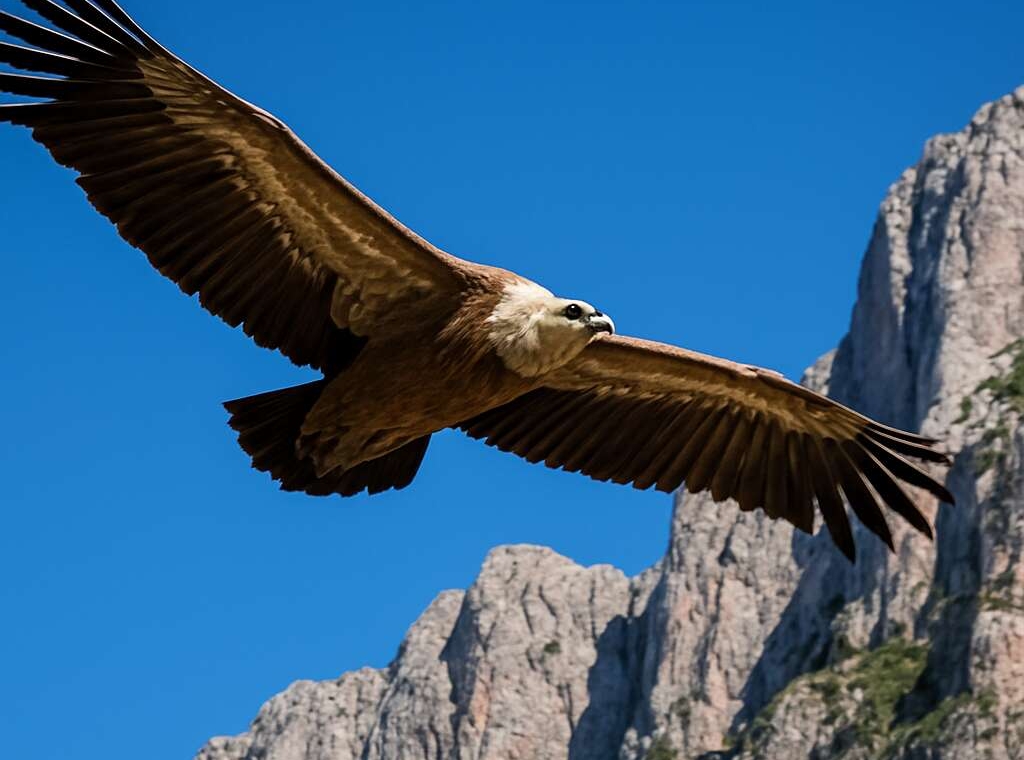



Latest Comments