Overview of broomrape and parasitic plants
Definition and classification
Cyprus’s agricultural scene hosts a curious drama: broomrape quietly trims yields in the shadows. Orobanche zosimae, a member of this elusive clan, surfaces as pale spikes from the soil, a quiet intruder that unsettles crops. Its life cycle reads like a covert operation—seeds awaken near a suitable host, and the plant siphons resources via an underground haustorium. The result is crop health shadowed by risk and a botanical mystery!
Orobanche zosimae embodies the parasitic archetype, attaching to a host through a haustorium—the underground conduit of sustenance. Broomrape groups fall into two camps: holoparasites, which lack chlorophyll and depend entirely on hosts, and hemiparasites, which retain some photosynthesis. Orobanche zosimae is a holoparasite, a vivid reminder that vitality can be borrowed rather than grown.
- Holoparasites: no chlorophyll, complete dependence
- Hemiparasites: partial photosynthesis, mixed dependence
- Orobanche zosimae: host-specific holoparasite
Key features of broomrape
Cyprus’s fields hide a quiet thief whose presence is felt more than seen. In some seasons broomrape can trim yields by up to 15%, turning bright harvests into cautionary tales and reminding farmers that danger can sprout from the soil’s shadow.
Orobanche zosimae threads into host roots with a pale, slender spear above ground—its true business lies underground. The haustorium forms a covert bridge, siphoning water and nutrients while the host strives to hold its vigor. It’s a striking reminder that vitality can be borrowed, not grown.
In Cyprus, this enigmatic parasite invites a careful, patient gaze—watch for subtle signs before the crop falters.
- Underground haustorium as a nutrient bridge
- Long-lasting seed bank within soil
- Host-specific parasitism shaping local agroecosystems
Lifecycle and host dependence
Across Cyprus’s fields, a pale spear hides in the shadow of thriving crops, yet it reshapes outcomes before the harvest is counted. Broomrape and its kin are obligate parasites, drawing water and nutrients from living hosts while photosynthesis remains off the table.
Life cycles hinge on a precise sequence that keeps the parasite in step with the host:
- Seed dormancy and germination are triggered by chemical cues from nearby host roots.
- Haustorium formation taps into the host’s vascular system, drawing water and nutrients.
- Nutrient theft sustains above-ground shoots and seeds, feeding a persistent soil seed bank.
In Cyprus, Orobanche zosimae embodies this underground economy, reminding growers that the threat lies beneath surface activity and that local agroecosystems adapt around subterranean roots.
Global distribution and habitats
Across the globe, broomrapes slip unseen from root to root, siphoning life with quiet cunning. In Cyprus fields, Orobanche zosimae reminds farmers that the threat begins underfoot, not in the visible stems. A stubborn seed bank can endure for years, waking only when conditions align.
Globally, broomrapes inhabit Mediterranean basins and pockets of Europe, Asia, and Africa, thriving in arid to semi-arid zones and disturbed farmland. They favor habitats where host roots mingle with soil and crops pop up as hosts—cereals, legumes, and brassicas.
- Mediterranean basins and adjoining arid zones
- Disturbed cropland and field margins
- Cropping systems with legume and brassica hosts
In Cyprus, a mosaic of rocky soil, irrigation lines, and diverse crops creates niches for Orobanche zosimae to anchor its life cycle. The pale hitchhiker remains a patient parasite, shaping outcomes long before the harvest.
Ecological and agricultural impact
Parasitic plants don’t wait for a coffee break—they steal the harvest before the sight of stems. In Cyprus, yield losses in infested fields can reach double digits in tough years, and Orobanche zosimae is the quiet saboteur noticed only when shoots fail to appear. This pale hitchhiker slips root to root, anchoring its life in the soilwork of crops long before visible signs emerge.
Ecologically, broomrapes redraw the underground food web: they siphon sugars from host roots and reshape soil microbes. Agriculturally, they dampen yields, complicate rotations, and hover over field margins where cereals, legumes, and brassicas meet alternate hosts.
- Host-root disruption weakens plants at the base.
- Photoassimilates flow to the parasite.
- Soil biodiversity shifts indirectly.
In Cyprus, rocky soils and trickling irrigation amplify the underground phase, a drama that unfolds long before harvest.
Species spotlight and broomrape relatives
Common broomrape species overview
Across Cyprus’ sun-cracked plains, an unseen rider slips along roots, draining vigor with patient persistence. The spotlight today is on Orobanche zosimae, a member of the broomrape clan that flares into bloom only after parasitizing a host. This species stands as a gateway to understanding its relatives—how they survive on the margins of photosynthesis and why they challenge farmers when the crop calendar tightens. The narrative blends myth with science to reveal what hides beneath the soil!
Relatives at a glance include:
- Orobanche cumana — the sunflower broomrape
- Orobanche aegyptiaca — Egyptian broomrape
- Phelipanche ramosa (syn. Orobanche ramosa) — branched broomrape
For Cypriot growers, this family portrait sharpens awareness of risk and frames how future crops may appear under the influence of these ghostly cousins.
Diversity within the Orobanche genus
Across Cyprus’ fields, Orobanche zosimae acts as a quiet omen—a bloom born from the root, not the sun. In infested plots, yields can slip by up to a third—an alarming signal of the parasite’s patient hunger. This species blooms only after linking with a host, turning the soil’s secrecy into a visible, elegiac drama. Its presence reveals the delicate balance between life and exploitation, a story etched in every brown stem and hidden haustorium. Remarkable!
Within the Orobanche genus, diversity writes its own myth: species vary in host taste, timing, and form, each a ghostly echo of the same strategy. The following facets illustrate this spectrum:
- Host range and specialization
- Variation in haustorial architecture
- Geographic breadth and ecological niches
Endemic species and conservation status
In Cyprus‘ fields, a single Orobanche zosimae bloom is a small revolution, a root-born rumor that outshines the sun-lit stubble. The species spotlight reveals a parasite that threads its fate through host roots, turning quiet soil into a stage for hidden drama.
- Endemic to Cyprus’ Mediterranean landscapes, with populations tied to local host flora.
- Conservation status: prioritized in national inventories and protected by local legislation due to its narrow range.
As a member of broomrape relatives, it shares a patient, policy-quiet strategy of parasitism that reads like myth in motion. Its endemic status invites careful stewardship of habitats, where underground networks become visible in the plant’s elegiac bloom.
Morphology and identification of variants
In Cyprus, a solitary Orobanche zosimae bloom reads like a small revolution, erupting from root networks with lunar quiet. This species spotlight highlights a broomrape relative that feeds on host roots, turning quiet stubble into a stage for drama hidden beneath the soil.
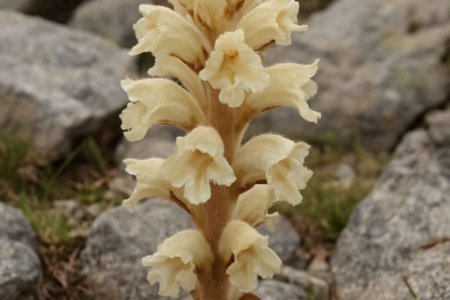
Morphology and variants: leafless, with scale-like bracts and a fleshy stem. Its flowers form a spike of tubular blooms, often ivory to purple. Variations among populations show subtle differences in color depth and spur length, aiding variant identification without taxonomic upheaval.
- Leafless parasitism, no chlorophyll
- Scale-like bracts on a fleshy stem
- Tubular flowers in a compact spike
Identification cues in the field hinge on the spike’s timing with host flora and the chlorophyll-free profile. The species stands as a quiet question in Cypriot fields—elegant, secretive, and scientifically indispensable.
Habitat, host interactions, and lifecycle
Host specificity and parasitism mechanisms
Cyprus’s sunlit scrublands cradle Orobanche zosimae, a root parasite that stays underground until it can strike a host’s roots. Its habitat favors calcareous soils and diverse, sun-warmed meadows where compatible plants persist, allowing this elusive broomrape to surface only when the conditions align. The drama unfolds unseen, a quiet testament to dependency. What a quiet disruptor!
Once a host root is sensed, Orobanche zosimae erects a slender stalk and forms a haustorium that taps into the host’s vascular system. The plant is holoparasitic, drawing water and nutrients without relying on its own photosynthesis. It’s a stark reminder that some life feeds entirely through others.
Its parasitism hinges on a precise sequence of steps. In Orobanche zosimae, host-root signals awaken germination and haustorium formation; the haustorium anchors into the host’s vascular tissues, siphoning water and nutrients while the parasite times emergence to the host’s growth cycle.
Seed germination and haustorium development
Orobanche zosimae hides underground along Cyprus’s sun-warmed calcareous meadows, a patient disruptor in a bright landscape—I’ve learned to watch for the moment it surfaces. It stays hidden until a compatible host root releases the cue that summons it upward, translating quiet soil into a hinge of dependence and surprise.
Once the signal arrives, the broomrape erects a slender stalk and forms a haustorium that implants into the host’s vascular tissues. Fully holoparasitic, it drinks water and nutrients without photosynthesis, a stark reminder that life often feeds through others.
Seed germination and haustorium development depend on a precise handshake with host roots: seeds awaken to exudates, germinate, and the haustorium anchors before emergence tracks the host’s cycle.
- Seed germination triggered by host-root exudates.
- Haustorium formation penetrates host vascular tissues.
- Emergence timed to host growth cycle.
Environmental factors affecting spread
In Cyprus’s sun-warmed calcareous meadows, Orobanche zosimae can cut host yields by up to 40% in peak outbreaks. The plant loves open, rocky patches and a steady diet of host roots, proving that parasitism can be a precise art rather than a chaotic invasion.
Habitat and host interactions hinge on the landscape’s subtle cues: the density of compatible hosts, timing of host growth, and soil chemistry that favors a spindly bloom over a serried mass. A compact balance exists between the parasite and the plant it leeches from—and Cyprus’ agricultural mosaics illustrate this relationship vividly.
- Climate and rainfall patterns
- Host plant density and diversity
- Soil calcareousness and disturbance
Lifecycle rhythms ride the host’s calendar; emergence follows host cycles, and environmental factors steer the spread across fields and scrubland. In the island’s climate, even small patches can hint at bigger dynamics waiting underground.
Seasonal dynamics and life cycles
Cyprus‘s sun-warmed calcareous meadows host a quiet drama as Orobanche zosimae threads into the host’s root system, siphoning lifeblood while the fields move toward harvest. In peak outbreaks, yields can fall by about 40%, a weathered statistic etched into the land. The unseen ritual thrives when hosts awaken.
Habitat and host interactions hinge on subtle cues: host density, timing of growth, and soil chemistry that favors a slender bloom over a crowded mass. A delicate balance exists between parasite and host, moving to Cyprus’s field rhythms.
- Seasonal emergence tracks the host growth pulse
- Moisture pulses trigger haustorium formation and attachment
- Calcareous soils shape patchwork patterns
Lifecycle rhythms ride the host’s calendar—emergence follows phenology and rain-fed cues, waiting for contact. I walk the meadows and feel the hidden clock ticking beneath the roots; Orobanche zosimae waits in the wings.
Impact on crops and ecosystems
In Cyprus’s sun-warmed calcareous meadows, Orobanche zosimae threads into host roots, siphoning energy while field rhythms drift toward harvest. It spends most of its life underground, surfacing as a pale bloom only when the host feeds. Peak outbreaks can cut yields by 40%—a figure the harvest remembers.
Habitat cues and host interactions hinge on subtle signals: host density, growth timing, and soil chemistry that favors a slender bloom over a crowded mass. A delicate balance exists between parasite and host, moving to Cyprus’s field rhythms.
- Host density and patchiness shape infection patterns
- Timing of host growth aligns with haustorium formation and attachment
- Calcareous soils shape patchwork emergence, influencing where blooms appear
Lifecycle rhythms ride the host’s calendar—emergence follows phenology and rain-fed cues, waiting for contact. I walk the meadows and feel the hidden clock ticking beneath the roots; the parasite waits in the wings, quietly reshaping crop performance and local biodiversity as the season unfolds.
Identification, research, and management
Field identification tips and distinguishing features
In Cyprus’s sun-scorched fields, Orobanche zosimae emerges as a pale specter, a parasite that steals life from its host with quiet resolve!
Field identification hinges on three telltale signs: leafless, scale-clad stems that rise from the soil, and a bristling inflorescence that hints at a flower’s ghostly bloom.
- Stems: slender, pale; no chlorophyll
- Inflorescence: tubular flowers, often purple
- Attachment: haustorium to host root systems
Researchers note that subtle distinctions from related broomrapes guide studies of Orobanche zosimae in Cypriot flora.
Researchers increasingly blend field surveys with molecular tools to map host networks and emergence patterns around Orobanche zosimae in Cypriot ecosystems.
Management, framed by ecological caution, underscores detection and monitoring. In Cyprus, data shape how practitioners interpret risk and allocate resources for study and conservation.
Molecular techniques and genetic studies
In Cyprus’s sun-scorched fields, Orobanche zosimae appears as a pale specter—leafless, scale-clad stems rising from the soil and a bristling inflorescence that hints at a ghostly bloom! Identification hinges on the plant’s lack of chlorophyll, its attachment to host roots, and the tubular flowers that crown the stem.
Researchers deploy molecular techniques and genetic studies to map lineages, host networks, and emergence timing beyond visual clues. DNA barcoding, SNP genotyping, and transcriptomic snapshots offer high-resolution insight into Orobanche zosimae populations within Cypriot ecosystems and help distinguish it from close broomrapes.
Management emphasizes detection and long-term monitoring, with data guiding risk interpretation and resource allocation for study and conservation. When field surveys meet sequencing data, the picture sharpens, revealing hotspots and seasonal windows where the parasite nudges Cypriot flora out of balance.
Integrated management strategies
In Cyprus’s sun-bleached fields, Orobanche zosimae speaks in whispers. Identification now means more than appearance; it means tracing the parasite from underground roots to the ghostly bloom above. A sobering reminder that threats to crops and ecosystems begin below the surface!
Integrated management strategies woven across detection, research, and stewardship transform uncertainty into insight.
- Early detection and monitoring networks
- Data-driven risk assessment and sharing
- Crop diversification and sanitation to disrupt hosts
- Stakeholder education and policy alignment
In Cyprus, researchers blend field surveys with molecular tools—DNA barcoding, SNP genotyping, and transcriptomics—to map lineages and host networks, sharpening our sense of when emergence may occur and how patterns shift with climate.
This integrated view ties field reality to the genome, directing resource focus and fostering a stewardship ethic that guards Cypriot flora and farms without surrendering balance.
Cultural, biological, and chemical control options
In Cypriot fields, Orobanche zosimae whispers from the margins of sun-bleached crops. Across susceptible plots, roughly 20% show the first signals as a ghost bloom lingers just beneath the surface.
Identification hinges on more than blooms; it is a puzzle of hidden roots and pale stems. Careful field notes and non-destructive sampling reveal the parasite’s early presence before it multiplies.
Research in Cyprus blends field insight with advanced science to map lineages and host networks, turning uncertainty into foresight. Orobanche zosimae becomes legible when above-ground signs align with buried seed banks.
Management options fall into cultural, biological, and chemical categories, offering diverse tools for stewardship.
- Cultural controls: sanitation, crop diversification, and rotation to disrupt hosts
- Biological controls: beneficial microbes and natural antagonists
- Chemical controls: regulated herbicides with integrated resistance management
Regulatory and quarantine considerations
Cyprus field surveys reveal that catching Orobanche zosimae in its quiet phase can save substantial yields; early detection can cut losses by up to 40%!
Identification goes beyond flowers; the parasite whispers through subtle shifts in growth and its underground plots. Non-destructive sampling and meticulous notes help confirm presence before the patches multiply.
Cyprus research teams blend field insight with modern science to map lineages and host networks, turning uncertainty into foresight. Above-ground signs align with buried seed banks.
On the management front, awareness of regulatory and quarantine considerations matters as much as crop rotation. Regulatory and quarantine considerations form the backbone of responsible stewardship.
- Movement controls for infested plant material
- Quarantine zoning and certification requirements
- Import/export phytosanitary documentation and permits

 by
by 




Latest Comments