Teucrium divaricatum subsp. canescens in Cyprus: Silver Breath of Stone and Sun
There are plants that bloom loudly,
and there are plants that endure.
Teucrium divaricatum subsp. canescens in Cyprus belongs to the latter—a quiet master of survival, clothed in silvered leaves, rooted deep into limestone and heat, shaped by wind, drought, and centuries of sun. It does not announce itself with colour alone. It reveals itself slowly, through texture, scent, and presence.
To encounter it is to understand Cyprus not as postcard,
but as geology, climate, and patience made visible.
A Shrub Written in Light
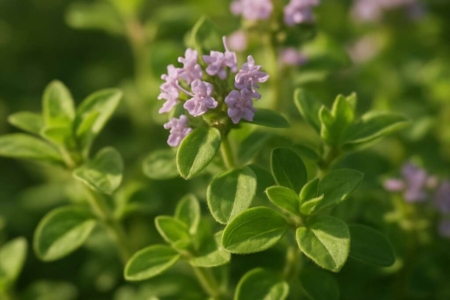
At first glance, Teucrium divaricatum subsp. canescens seems almost hesitant. Its foliage is soft, grey-green to silvery white, dusted as though by ash or moonlight. This “canescens”—its downy, felted surface—is not ornament. It is armour.
Each tiny hair reflects sunlight, traps moisture, slows evaporation. The plant wears its adaptations openly, a textbook written in leaf and stem.
Here, in the unforgiving summers of Cyprus, survival is an art. This shrub is a master.
A Member of the Mountain Mint Family
Belonging to the Teucrium genus—relatives of germanders and distant cousins of mint—this subspecies carries a subtle aromatic presence. Brush past it, and the air responds: dry, herbal, resinous. A scent of stone warmed by noon.
Teucrium divaricatum subsp. canescens in Cyprus typically grows low and spreading, its branches divaricate—splayed outward, reaching for space rather than height. Small pale flowers, often creamy white to soft yellow, appear modestly, never competing with the brilliance of spring orchids or anemones.
This is not a plant of spectacle.
It is a plant of structure.
Landscapes It Calls Home
You will not find this subspecies in rich soils or shaded valleys. It prefers austerity.
Rocky slopes.
Limestone outcrops.
Dry hillsides.
Open phrygana and scrubland.
Across Cyprus, particularly in semi-mountainous and upland areas, including the margins of the Troodos Mountains, Teucrium divaricatum subsp. canescens establishes itself where others fail. Grazed land, sun-exposed ridges, and places where soil is thin and water fleeting—here it thrives.
Its presence signals resilience.
Its absence warns of imbalance.
A Plant Shaped by Wind and Time
To understand Teucrium divaricatum subsp. canescens in Cyprus, one must think in centuries. This is vegetation shaped not by seasons alone, but by millennia of Mediterranean climate—hot, dry summers; brief, generous winters; relentless light.
Its growth is slow. Deliberate. Each branch thickens cautiously, conserving energy, responding to conditions rather than defying them.
Where fast-growing plants burn bright and vanish, this shrub persists. It is not impatient. It has learned the rhythm of the island.
Endemic Identity, Local Responsibility
This subspecies is endemic to Cyprus. It exists nowhere else on Earth.
That fact alone elevates its importance.
Endemism is not rarity for rarity’s sake—it is evidence of long, uninterrupted dialogue between land and life. Teucrium divaricatum subsp. canescens in Cyprus evolved here, adapted here, belongs here.
And that belonging is fragile.
Overgrazing, land clearance, uncontrolled development, and fire frequency all threaten the delicate balance that allows such plants to persist. Once disrupted, the web of soil microbes, pollinators, and microclimates cannot be easily restored.
This shrub does not relocate.
It does not recover quickly.
It remembers disturbance.
Quiet Ecological Work
Though unassuming, Teucrium divaricatum subsp. canescens performs vital ecological roles. Its roots stabilise thin soils on slopes. Its flowers support small insects and pollinators adapted to dry landscapes. Its presence contributes to the mosaic of phrygana vegetation that protects hillsides from erosion.
In summer, when much of the land retreats into dormancy, this plant remains—holding ground, holding moisture, holding memory.
In this way, Teucrium divaricatum subsp. canescens in Cyprus is not background. It is infrastructure.
A Plant Best Met Slowly
Like many Cypriot natives, this shrub rewards attention rather than speed. To truly see it, one must stop walking and start looking.
Notice how the leaves catch light differently at dawn than at noon.
How the plant’s colour shifts with dust, with season, with angle of sun.
How its scent emerges only when invited.
This is not a plant for hurried photography or careless collection. It is for study, respect, and quiet companionship.
Cultural Silence, Botanical Significance
Unlike olives or carobs, Teucrium divaricatum subsp. canescens holds little presence in folklore or cuisine. Its value is not symbolic in human terms—but ecological, scientific, and intrinsic.
And yet, in that silence lies meaning.
Cyprus is rich not only in the plants we use, but in those we leave alone. Species like this remind us that value does not require utility. Existence alone is sufficient.
The Keyword of Place and Precision
In scientific writing and conservation dialogue, clarity matters. When we speak of STeucrium divaricatum subsp. canescens in Cyprus, precision anchors responsibility. Names define scope. Scope defines protection.
To name something accurately is to acknowledge its boundaries, its uniqueness, its vulnerability. This is not generic scrub. It is this plant, in this place, under these conditions.
A Mirror of the Island
If Cyprus were reduced to a single plant—not the flamboyant, but the faithful—it might look like this.
Silvered against sun.
Rooted in stone.
Quiet, but unyielding.
Teucrium divaricatum subsp. canescens in Cyprus reflects the island’s deeper truth: that survival here is not loud, not lush, not excessive—but measured, intelligent, and beautifully restrained.
After the Flowering
When flowering fades, the shrub remains. Leaves persist. Stems harden. Life continues invisibly. The plant waits out heat, drought, and time itself.
And in that waiting, it teaches.
That not everything must bloom brightly to matter.
That endurance is its own form of beauty.
That Cyprus, at its core, is a land of quiet strength.
To walk its hills and notice this plant is to begin seeing the island as it truly is—not merely as destination, but as dialogue between earth and sun, written in silver leaves and stone-bound roots.

 by
by 



Latest Comments