Understanding Ophrys argolica subsp. elegans
Overview and Classification – Taxonomy and botanical classification of ophrys orchids
Ophrys argolica subsp. elegans is a captivating member of the Ophrys orchid family, renowned for its striking appearance and elusive nature. This subspecies, often mistaken for its more common relatives, possesses unique floral characteristics that set it apart—delicate petals with a subtle shimmer and a lip patterned with intricate markings. Its presence in Cyprus is a testament to the island’s rich botanical diversity, making it a prime subject for enthusiasts and botanists alike.
Classified within the Ophrys genus, Ophrys argolica subsp. elegans belongs to a complex taxonomy rooted in its specialized pollination strategy and morphological traits. The botanical classification of Ophrys orchids, including this subspecies, is based on detailed floral structure, pollinator relationships, and genetic markers. This classification not only helps in understanding their evolutionary history but also emphasizes their ecological significance in Mediterranean habitats.
- Genus: Ophrys
- Species: argolica
- Subspecies: elegans
Understanding the taxonomy of Ophrys argolica subsp. elegans reveals a fascinating story of adaptation and survival, highlighting its role in the delicate balance of Cyprus’s native flora. Its classification underscores the importance of preserving these botanical treasures, each with their unique evolutionary journey—an enchanting reminder of the island’s natural mystique.
Physical Characteristics – Distinctive features and appearance of Ophrys argolica subsp. elegans
Within the shadowed realms of Cyprus’s lush terrain, Ophrys argolica subsp. elegans emerges as a hauntingly beautiful specter of the orchid world. Its petals, fragile yet resilient, shimmer with an almost ethereal glow, catching the scant light in a dance of delicate translucence. The lip, intricately patterned with labyrinthine markings, acts as a siren’s call to its preferred pollinators—an exquisite example of evolution’s dark poetry.
This subspecies boasts a slender, elongated form, with petals that curl inward, creating a mysterious silhouette against the rugged landscape. Its unique appearance often confounds even seasoned botanists, as the subtle shimmer and intricate markings evoke a sense of ancient magic. The precise patterning on the lip varies slightly from flower to flower, a testament to the ongoing battle for survival and adaptation in Cyprus’s diverse ecosystems.
Ophrys argolica subsp. elegans is a living relic, its distinctive features whispering stories of resilience amid the Mediterranean’s rocky embrace. Each blossom is a fleeting glimpse into the mysterious depths of botanical artistry, a creature of the night cloaked in natural elegance.
Habitat and Distribution – Geographical range and preferred environments
Ophrys argolica subsp. elegans is a captivating orchid species whose habitat is as mysterious as its delicate beauty. Found exclusively in Cyprus, this subspecies thrives in the island’s rugged, rocky terrains where the Mediterranean climate creates the perfect backdrop for its ephemeral blooms. Its distribution is largely confined to specific microhabitats that offer well-drained soils and minimal competition, making it a true rarity in the region.
The preferred environments of Ophrys argolica subsp. elegans include limestone slopes, open grasslands, and sparse scrublands. These areas provide the warmth and sunlight essential for its growth, while the rocky substrate offers protection from overgrowth and disturbance. Due to its specialized habitat requirements, the orchid’s presence often indicates a pristine, undisturbed ecosystem.
Cyprus’s unique topography and climate
serve as both a sanctuary and a challenge for this orchid, shaping its limited but vital distribution.
Conservation Status – Endangered status and conservation efforts
In the shadowy corners of Cyprus’s rugged landscapes, Ophrys argolica subsp. elegans teeters on the brink of extinction, its delicate beauty overshadowed by a fragile existence. Recognized as an endangered species, this orchid’s survival hinges on the preservation of its pristine habitats—limestone slopes, open grasslands, and sparse scrublands—that serve as crucial sanctuaries. The rarity of Ophrys argolica subsp. elegans is a stark reminder of the delicate balance within Mediterranean ecosystems, where even minor disturbances threaten its fragile presence.
Conservation efforts are vital, yet challenging, due to its highly specialized habitat requirements and limited distribution. Efforts often focus on protecting the microhabitats where the orchid thrives, including controlling invasive species and minimizing human disturbance. To date,
Ophrys argolica subsp. elegans
remains a symbol of Cyprus’s unique botanical heritage, and safeguarding its future demands a concerted effort to maintain the ecological integrity of its environment.
- Monitoring population trends to assess threats
- Habitat restoration to ensure suitable growing conditions
- Legal protections to prevent habitat destruction
- Public awareness campaigns to foster local stewardship
Identification and Morphological Features
Flower Structure – Details of the flower’s shape, size, and color patterns
Standing out amid the Mediterranean flora, Ophrys argolica subsp. elegans captivates with its remarkably intricate flower structure. Its blossoms are a testament to nature’s artistry, with petals that seem almost sculpted rather than simply grown. Typically, the flower measures about 3 to 4 centimeters in length, with a shape that mimics the delicate yet deliberate curves of a miniature butterfly in repose.
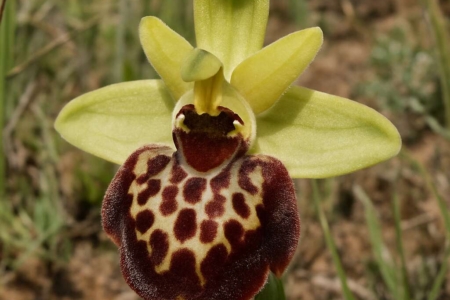
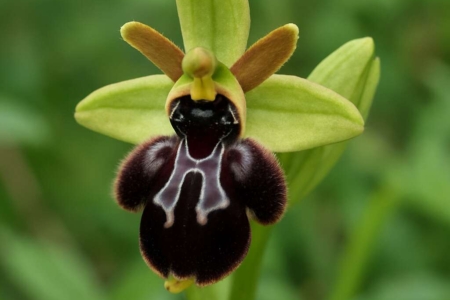
The color palette of Ophrys argolica subsp. elegans is equally enthralling—ranging from velvety browns and deep purples to hints of iridescent green, all patterned with meticulous detail. The labellum, or lip, often bears a distinctive, velvety appearance with a central pattern that resembles a pair of eyes, enhancing its mimicry of an insect. This strategic design isn’t merely aesthetic; it plays a crucial role in attracting specific pollinators, making the flower’s structure a marvel of evolutionary ingenuity.
- The flower’s shape is elongated and slightly curved, reminiscent of a small, elegant butterfly.
- Color patterns include shades of brown, purple, and green, with intricate markings that resemble a face or eyes.
- The size of each blossom generally hovers around 3 to 4 centimeters, striking a delicate balance between subtlety and spectacle.
Such morphological features set Ophrys argolica subsp. elegans apart, making it a prized gem among Cyprus’s endemic orchids. Its floral architecture not only enhances its visual appeal but also underscores its role as a master of mimicry and pollination strategy in its native habitat.
Leaf and Stem Characteristics – Distinctive foliage and plant growth characteristics
Ophrys argolica subsp. elegans is distinguished not only by its captivating floral display but also by its unique foliage and growth habits. Unlike many orchids that boast broad or lush leaves, this subspecies features narrow, lance-shaped leaves that cling closely to the stem, providing a streamlined appearance. The leaves are typically a muted green, often with a slightly waxy texture that helps reduce water loss, an adaptation for its Mediterranean habitat.
The plant’s stem is slender yet sturdy, often reaching up to 20 centimeters in height. Its growth form is upright, with leaves arranged alternately along the stem, creating a delicate but resilient silhouette. The overall structure offers a perfect balance—neither overly flamboyant nor too sparse—highlighting the orchid’s subtle elegance.
Notably, Ophrys argolica subsp. elegans exhibits a distinctive growth pattern: the flowers emerge from the apex of the stem, spaced evenly to maximize visibility and pollination success. This growth habit, coupled with its foliage, makes it easily recognizable among Cyprus’s endemic orchids. Its understated yet intricate features underscore its role as a master of adaptation in the often challenging Mediterranean environment.
Comparison with Related Subspecies – Key differences between subsp. elegans and other Ophrys species
Among Cyprus’s captivating endemic orchids,
Ophrys argolica subsp. elegans
stands out not only for its delicate beauty but also for its distinctive morphological features that set it apart from related subspecies. While many Ophrys species share a similar floral structure, subsp. elegans exhibits subtle yet critical differences that aid in precise identification and appreciation of its unique adaptation to the Mediterranean climate.
One of the most notable features is its floral morphology. Compared to other Ophrys orchids,
Ophrys argolica subsp. elegans
boasts smaller, more elongated lip shapes with intricate markings that resemble tiny works of art. The flowers tend to display a subtle color palette, often incorporating shades of brown and cream, which blend seamlessly into their natural environment. This contrasts with the more vivid or contrasting patterns seen in related subspecies, making
Ophrys argolica subsp. elegans
a master of camouflage and subtlety.
In terms of plant structure, the foliage of
Ophrys argolica subsp. elegans
is characterized by its narrow, lance-shaped leaves that cling tightly to the stem, unlike the broader leaves of some other Ophrys species. The stems are slender yet resilient, typically reaching up to 20 centimeters—an elegant height that balances delicacy with robustness. The flowers emerge from the apex of the stem, spaced evenly in a manner that maximizes visibility and pollination efficiency, a growth habit that is quite distinctive.
- Size of the flowers: Smaller and more elongated than related subspecies.
- Color patterns: Subtle hues with intricate markings, favoring brown and cream tones.
- Leaf morphology: Narrow, lance-shaped leaves that cling to the stem.
- Growth habit: Flowers emerging from the apex with an upright, resilient stem.
These morphological nuances not only facilitate accurate identification but also highlight the evolutionary finesse of
Ophrys argolica subsp. elegans
. Its distinct features exemplify a fascinating convergence of form and function, optimized for survival in the challenging terrains of Cyprus. The differences between this subspecies and its relatives underscore a complex web of adaptation, revealing nature’s artistry in sculpting life for specific environments and ecological niches.
Habitat and Growing Conditions
Soil Preferences – Optimal soil types and composition for growth
In the unique tapestry of Cyprus’s flora, Ophrys argolica subsp. elegans stands out as a testament to nature’s subtle artistry. Its habitat demands a delicate balance, thriving in environments that offer both stability and a touch of complexity. The optimal soil types for Ophrys argolica subsp. elegans are those that mimic its native Mediterranean conditions—well-drained, calcareous substrates rich in organic matter. These soils provide the necessary nutrients and aeration, supporting the orchid’s intricate root system and ensuring its resilience amidst the rocky terrains it favors.
For lovers of this captivating orchid, understanding its soil preferences is essential. Ophrys argolica subsp. elegans prefers a soil composition that allows for good drainage while maintaining moisture retention. This balance prevents root rot and encourages healthy growth. Typically, the soil should be slightly alkaline, with a pH that ranges from 7.0 to 8.0, and contain a mix of limestone fragments and fine organic material. Such conditions are often found in limestone-rich hillsides or rocky outcrops scattered across Cyprus, where the orchid’s roots can weave into the earth’s natural architecture with ease.
Light and Temperature Requirements – Sunlight exposure and temperature tolerance
In the sun-drenched landscapes of Cyprus, Ophrys argolica subsp. elegans finds its sanctuary beneath the warm Mediterranean sky. This orchid’s habitat is a testament to nature’s delicate equilibrium—thriving in environments where sunlight filters through rocky outcrops and limestone hillsides. The ideal growing conditions for Ophrys argolica subsp. elegans demand a careful balance of light and temperature, ensuring its survival amidst the island’s rugged terrain.
The orchid prefers full sun exposure during the morning hours, basking in the gentle warmth that energizes its intricate blooms. As the day progresses, dappled shade provides relief from the intense midday heat, creating a microclimate perfectly suited to its growth. Ophrys argolica subsp. elegans is remarkably tolerant of the Mediterranean climate’s seasonal temperature fluctuations, thriving in temperatures ranging from cool spring mornings to hot summer afternoons. Its resilience is rooted in its adaptation to the Mediterranean’s mild, wet winters and dry, scorching summers.
Growth is most vigorous when daytime temperatures stay within the range of 20 to 30°C, with cooler nights offering a restorative respite. In Cyprus, where the sun’s golden rays paint the landscape, this orchid’s ability to flourish in well-drained yet moisture-retentive soils complements its light and temperature needs. For enthusiasts eager to nurture Ophrys argolica subsp. elegans, understanding these subtle environmental nuances is key to appreciating its captivating beauty and resilience in its native habitat.
Ecological Associations – Pollinators and other plant interactions
Ophrys argolica subsp. elegans occupies a unique ecological niche within the rugged landscapes of Cyprus, thriving amid rocky limestone outcrops and hillside terraces where the Mediterranean sun bathes the terrain in golden light. Its habitat is characterized by well-drained, calcareous soils that retain moisture just enough to sustain its delicate root system, making it highly adapted to the island’s seasonal shifts. The orchid’s presence is often a telltale sign of the pristine, undisturbed environments that dot Cyprus’s terrain, where the interplay between geology and climate creates the perfect backdrop for its growth.
Ecologically, Ophrys argolica subsp. elegans has developed intimate relationships with local pollinators, primarily solitary bees that are irresistibly drawn to its intricate flower patterns. These bees, mistaking the flower’s mimicry for female bee signals, facilitate pollination in a fascinating dance of evolutionary adaptation. This symbiosis not only ensures the orchid’s reproductive success but also underscores the delicate balance of its habitat. Furthermore, Ophrys argolica subsp. elegans often interacts with other native flora, sharing nutrient and moisture resources within its microhabitats, creating a vibrant tapestry of plant interrelations.
To understand the orchid’s thriving ecosystem, it’s helpful to consider its natural companions. These include a variety of Mediterranean herbs and grasses that flourish in similar soil and light conditions, forming an intricate web of plant associations. Such cohabitations are vital for maintaining the ecological integrity of its habitat and safeguarding the orchid’s future in the wild. The resilient Ophrys argolica subsp. elegans exemplifies a remarkable harmony with its surroundings, a testament to nature’s enduring capacity for adaptation and coexistence.
Cultivation and Cultivation Tips
Propagation Methods – Growing from seeds, division, and transplantation
Growing Ophrys argolica subsp. elegans is a pursuit that demands both patience and an appreciation for its intricate life cycle. Propagation primarily occurs through seed dispersal—a process that relies heavily on the symbiotic relationship with mycorrhizal fungi in the soil. These minute, dust-like seeds require specific fungal partners to germinate successfully, making natural propagation a slow but fascinating phenomenon. Cultivators seeking to accelerate this process often turn to division or transplantation, although these methods require meticulous handling to avoid damaging the fragile root systems of this orchid.
When cultivating Ophrys argolica subsp. elegans, attention to soil composition is paramount; well-draining, calcareous substrates mimic its native Mediterranean habitat. Transplantation is most successful in early spring, during cooler periods when the plant’s dormant phase allows for minimal stress. For propagation from seeds, patience is essential, as germination can take several seasons, but the reward lies in nurturing a rare and beautiful orchid that embodies the spirit of Cyprus’ unique biodiversity.
Care and Maintenance – Watering, fertilizing, and pruning guidelines
In the shadowed corners of cultivation, Ophrys argolica subsp. elegans reveals itself as a delicate yet fiercely resilient enigma. Its survival hinges on a meticulous balance—watering must be infrequent but precise, mimicking the fleeting moisture of its native Mediterranean home. Overwatering risks rotting its fragile roots, while too little moisture can stifle its subtle growth. Fertilizing should be approached with restraint; a gentle dose once or twice during the growing season suffices, ensuring the orchid’s natural vigor remains unspoiled.
Pruning, though seemingly minimal, plays a vital role in maintaining its haunting elegance. Carefully remove dead or yellowing leaves to prevent disease, but never disturb the tender stem—each part of Ophrys argolica subsp. elegans is a whisper of life, easily shattered. For those seeking to nurture this orchid’s ghostly beauty, embrace a cycle of patience and respect. In Cyprus’s climate, the key is to replicate the orchid’s native environment—an artful dance between nature’s whispers and human care.
Challenges in Cultivation – Common issues faced and troubleshooting advice
Cultivation of Ophrys argolica subsp. elegans presents a delicate dance—one that demands patience, intuition, and a reverence for its native Mediterranean roots. This orchid, with its ghostly charm, thrives in conditions that mimic the fleeting moisture and subtle sunlight of Cyprus’s rugged landscapes. Yet, its sensitivity to environmental fluctuations can pose significant challenges for growers.
A common issue faced when cultivating Ophrys argolica subsp. elegans is overwatering, which risks suffocating its tender roots and inviting rot. Conversely, neglecting moisture can cause its fragile foliage to wither prematurely. Troubleshooting this delicate balance involves closely monitoring soil moisture levels and ensuring excellent drainage—an absolute necessity for this species.
Furthermore, pests and fungal infections can threaten its ethereal appearance. Regular inspection and gentle pruning of dead or yellowing leaves help maintain its haunting elegance, while avoiding disturbance of the tender stem preserves its fragile vitality. For enthusiasts nurturing this unique orchid, understanding its specific soil preferences and temperature needs—favoring well-drained, sandy soils and temperate climates—can make all the difference.
Conservation and Environmental Importance
Threats to Wild Populations – Habitat loss, over-collection, and climate change
In the fragile tapestry of Cyprus’s wildflower realm, Ophrys argolica subsp. elegans emerges as a poetic testament to nature’s intricate artistry. Yet, beneath its captivating allure lies a vulnerable sentinel, teetering on the brink of disappearance. Conservation efforts are vital, for this distinctive orchid not only enchants with its delicate beauty but also signifies the health of its environment. Sadly, its wild populations face relentless threats, casting shadows over its future.
Habitat loss remains the most insidious adversary, driven by expanding urbanization, agricultural encroachment, and infrastructural development. Over-collection by collectors seeking rare specimens further diminishes these orchids in their native terrain. Climate change, with its unpredictable shifts in temperature and rainfall, exacerbates their peril, forcing delicate ecological balances into chaos. To safeguard Ophrys argolica subsp. elegans, understanding these threats is crucial, as each factor chips away at the resilience of this natural wonder.
- Habitat destruction from land development
- Illegal collection and poaching
- Climate variability disrupting flowering cycles
As stewards of Cyprus’s botanical heritage, recognizing the importance of protecting Ophrys argolica subsp. elegans becomes a shared responsibility—one that sustains not only this exquisite orchid but also the wild ecosystems it calls home. Without vigilance, this jewel of the Mediterranean may fade into memory, a whisper of what once thrived in harmony with nature’s delicate balance.
Legal Protection and Regulations – Protected areas and legal considerations
Legal protection and strict regulations are crucial for preserving Ophrys argolica subsp. elegans. This rare orchid, native to Cyprus, benefits from designated protected areas where human activity is carefully managed to prevent habitat destruction. These zones act as sanctuaries, safeguarding the delicate balance that allows Ophrys argolica subsp. elegans to thrive.
In Cyprus, legislation explicitly classifies Ophrys argolica subsp. elegans as a protected species. Collectors and enthusiasts are prohibited from removing or damaging these orchids, ensuring that wild populations remain resilient. Enforcement of these laws is vital to combat illegal collection and poaching, which remain significant threats to this enchanting orchid.
Within protected areas, conservation efforts focus on habitat restoration and monitoring. These measures help maintain the environmental conditions necessary for Ophrys argolica subsp. elegans to flourish. By supporting legal frameworks and respecting regulations, we can ensure this botanical treasure continues to grace Cyprus’s wild landscapes for generations to come.
Role in Ecosystems – Pollination and biodiversity significance
The delicate allure of Ophrys argolica subsp. elegans extends far beyond its captivating appearance; it plays a vital role in maintaining the ecological harmony of Cyprus’s unique landscapes. As a specialized pollination ambassador, this orchid attracts specific insect pollinators, facilitating intricate relationships that support local biodiversity. Its presence is a testament to a resilient and thriving ecosystem, where each organism contributes to the overall health and stability of the environment.
Conservation efforts for Ophrys argolica subsp. elegans are essential, not only to preserve its enchanting beauty but also to uphold the ecological services it provides. Protecting this species ensures the continuation of its pollination partnerships and safeguards the biodiversity that makes Cyprus’s wild habitats so extraordinary. Without such guardianship, the delicate web of life—woven with the threads of native orchids and pollinators—faces unraveling.
In the grand tapestry of Cyprus’s natural heritage, Ophrys argolica subsp. elegans stands as a botanical sentinel. Its preservation supports the health of local ecosystems, fostering a rich environment where myriad species can flourish. Recognizing its ecological significance underscores the importance of safeguarding this rare orchid, ensuring that future generations will be able to marvel at its enchanting presence in the wild.
Where to Find and How to Observe Ophrys argolica subsp. elegans
Best Viewing Seasons – Optimal times for spotting in the wild
For those fortunate enough to wander the sun-drenched hills of Cyprus, spotting Ophrys argolica subsp. elegans is a botanical treasure hunt worth every step. These orchids, with their captivating mimicry and delicate charm, typically bloom during the early spring months—March through May—when the Mediterranean landscape awakens in a symphony of color. The best time to observe Ophrys argolica subsp. elegans in its natural habitat is precisely when the wildflowers are in full flourish, often after a rare spring rain that seems to coax these elusive orchids from their underground slumber.
To increase your chances of witnessing this marvel, focus your exploration on the limestone-rich soils of the foothills and rocky outcrops where Ophrys argolica subsp. elegans prefers to thrive. These orchids favor well-drained, calcareous terrain, often nestled among a tapestry of native grasses and low shrubs. As you traverse the terrain, keep an eye out for their distinctive flower structure—an intricate blend of patterns and hues that serve as nature’s own masquerade. Remember, the period from late March to early May offers the most vibrant displays, making it the prime window for botanical enthusiasts eager to catch Ophrys argolica subsp. elegans in its full glory.
Guidelines for Responsible Observation – Respect for natural habitats and ethical practices
Within the rugged, sun-dappled contours of Cyprus, the elusive Ophrys argolica subsp. elegans reveals itself only to the most attentive and patient explorers. To witness this enchanting orchid in its natural habitat is to glimpse a fleeting whisper of nature’s artistry—an intricate masquerade of patterns and hues that seem almost too perfect to be real. Finding Ophrys argolica subsp. elegans requires a keen eye and respectful reverence for the land it calls home.
In its preferred terrain—limestone-rich soils of rocky outcrops and gentle foothills—this orchid thrives amidst native grasses and sparse shrubs. The best time to observe Ophrys argolica subsp. elegans is during the vibrant months of late March to early May, when the wildflowers burst into life after spring rains. To increase your chances, focus your search on well-drained calcareous terrain, where the delicate blossoms often cling to the earth’s crevices.
When you do spot Ophrys argolica subsp. elegans, approach with a gentle step and a watchful gaze. Its distinctive flower structure—an artful blend of patterns, mimicking the form of pollinating insects—serves as a testament to evolutionary ingenuity. To observe responsibly, remember:
- Respect the fragile habitat, avoiding trampling or disturbing surrounding flora.
- Keep a safe distance to prevent damage to the delicate flowers and prevent habitat degradation.
- Refrain from collecting or uprooting orchids, as this can threaten their survival in the wild.
By adhering to these ethical practices, enthusiasts can help preserve the enchanting beauty of Ophrys argolica subsp. elegans for generations to come. Truly, witnessing this orchid in its pristine environment is a rare privilege—one that demands both admiration and a deep sense of stewardship.
Touristic and Botanical Tours – Organized excursions and botanical gardens featuring the species
For those captivated by the mystique of Ophrys argolica subsp. elegans, organized botanical tours in Cyprus offer an unparalleled opportunity to witness this elusive orchid in its natural splendor. Reputable tour operators design excursions that take you deep into the limestone-rich terrains where Ophrys argolica subsp. elegans thrives, guiding enthusiasts through the rugged beauty of the island’s wildflower corridors.
Many botanical gardens across Cyprus also feature dedicated sections showcasing Ophrys argolica subsp. elegans, allowing visitors to appreciate this species up close in a controlled environment. These curated experiences often include expert-led talks on the orchid’s ecological significance and conservation status, enriching your understanding and fostering a deeper connection to this botanical marvel.
- Join specialized tours during the peak blooming season from late March to early May for the best chance to see Ophrys argolica subsp. elegans in full display.
- Visit protected areas and nature reserves where the orchid is most commonly found, adhering to responsible observation practices to preserve its fragile habitat.
Whether wandering through rocky outcrops or attending a guided botanical excursion, observing Ophrys argolica subsp. elegans becomes an unforgettable journey — a rare glimpse into nature’s intricate artistry and a testament to Cyprus’s lush biodiversity. This species, with its mesmerizing flower structure, continues to inspire both scientists and nature lovers alike, making every encounter a treasure worth safeguarding.
Further Resources and References
Botanical Literature – Key books and scientific papers
For those captivated by the mystique of Ophrys argolica subsp. elegans, exploring further resources can unveil layers of botanical wonder. The wealth of scientific literature dedicated to this subspecies offers insights into its unique adaptations and ecological significance. Delve into key books and peer-reviewed papers that highlight its role within Mediterranean biodiversity, especially within Cyprus’s diverse habitats.
Among the most valuable references are authoritative botanical texts that detail the taxonomy, reproductive strategies, and conservation challenges surrounding Ophrys argolica subsp. elegans. These resources are essential for botanists, conservationists, and enthusiasts eager to deepen their understanding of this enchanting orchid. To guide your journey, here are some recommended works:
- “Orchid Species of the Mediterranean Basin,” a comprehensive guide to regional orchids including Ophrys argolica subsp. elegans.
- Scientific articles published in journals such as *Botanical Journal of the Linnean Society* and *Annales Botanici Fennici*, which document ecological interactions and pollination mechanisms.
- Field manuals focusing on habitat restoration and conservation strategies for Mediterranean orchids, with specific chapters dedicated to Ophrys argolica subsp. elegans.
By consulting these references, enthusiasts can appreciate the intricate beauty and ecological importance of Ophrys argolica subsp. elegans, while also supporting ongoing conservation efforts. Literature that explores its evolutionary history and habitat preferences provides a crucial foundation for appreciating this remarkable species in both wild and cultivated settings.
Conservation Organizations – Associations working to preserve the species
For those passionate about preserving the delicate balance of Cyprus’s unique flora, exploring further resources on Ophrys argolica subsp. elegans is essential. Conservation organizations dedicated to Mediterranean orchids play a vital role in safeguarding this captivating species. These associations often publish detailed reports, organize field surveys, and promote habitat restoration projects that specifically include Ophrys argolica subsp. elegans.
Many initiatives focus on monitoring wild populations and combating threats such as habitat loss and illegal collection. Supporting these organizations helps ensure the survival of Ophrys argolica subsp. elegans in its natural environment. Engaging with their work provides valuable insights into ongoing conservation efforts and the ecological importance of this orchid within Cyprus’s biodiversity. Here are some prominent groups working tirelessly for its preservation:
- Cyprus Botanical Society
- MedOrchids Conservation Network
- European Orchid Conservation Program
By aligning with these associations, enthusiasts and professionals can contribute to the protection of Ophrys argolica subsp. elegans and enjoy enriched knowledge about its ecological significance. Their efforts are crucial in maintaining the vibrant tapestry of Mediterranean habitats where this remarkable orchid thrives.
Community and Enthusiast Groups – Online forums and local plant societies
For those captivated by the enchanting allure of Ophrys argolica subsp. elegans, connecting with community and enthusiast groups opens a portal to deeper understanding and active participation in its preservation. Online forums dedicated to Mediterranean orchids offer a vibrant space where passionate botanists and amateur naturalists share sightings, photographs, and conservation tips. These digital communities foster a sense of camaraderie and collective responsibility, making it easier to stay informed about the latest developments in Ophrys argolica subsp. elegans conservation efforts.
Local plant societies across Cyprus also serve as invaluable resources. They organize field excursions, workshops, and lectures that delve into the intricacies of this remarkable orchid species. Engaging with these groups provides opportunities to contribute to citizen science projects, such as monitoring wild populations and documenting flowering seasons. Participating in such activities not only amplifies awareness but also enhances the collective effort to safeguard Ophrys argolica subsp. elegans in its native habitat.
- Join online forums dedicated to Mediterranean orchids for real-time updates and discussions.
- Attend local plant society events to connect with experts and fellow enthusiasts passionate about Ophrys argolica subsp. elegans.
- Volunteer for community-led conservation initiatives focused on habitat restoration and species monitoring.
By immersing oneself in these vibrant networks, enthusiasts and professionals alike can foster a shared commitment to the enduring legacy of Ophrys argolica subsp. elegans, ensuring its survival amidst the ecological challenges of today.

 by
by 


Latest Comments